
Working People in Alberta are Under Attack
Since taking office, the United Conservative Party (UCP) has taken aim at the rights of working people in Alberta. It’s clear the provincial government is on a mission to tip the scales in favour of corporations and against workers.
Each section below outlines the critical changes to employment law that makes you less safe at work and less free.
How to Use this Site
This site is a resource for workers who want to protect their rights at work. Each section has information to be shared with coworkers, family, and friends.
Most Albertans don't know the full scope of what they're losing with the UCP's new laws. Help get the word out and encourage others to speak out!
Referendum Guide
On October 19, 2026, Albertans will be asked to respond to 10 individual referendum questions, including on matters related to social supports and immigration, constitutional matters, and whether Alberta should remain a province in Canada.
The Alberta government initiated this referendum and, in turn, determined the results to be non-binding. This raises two major concerns for Unifor. First, why put Albertans through an extensive, costly and time-consuming process for no apparent purpose? Second, why present questions so politically divisive to working people, when there are far larger economic and political factors affecting Albertans’ standard of living.
This document constitutes the official positioning statement for the October referendum of Unifor, Canada’s largest private sector union.
The referendum is a secret ballot and you are free to vote with your conscience. Each question is a not-so-subtle attempt to drive a wedge between Alberta and Canada, so voting for a united Canada and NO on all nine questions will send an important message to the provincial government that it must move on and deal with the real issues facing Alberta’s working families.
Section 1: Remain a Strong Province Within Canada
Ballot Question #10
“Should Alberta remain a province in Canada, or should the Government of Alberta commence the legal process required under the Canadian Constitution to hold a binding provincial referendum on whether or not Alberta should separate from Canada?”
- Option 1: Alberta should remain a province in Canada.
- Option 2: The Government of Alberta should commence the legal process required under the Canadian Constitution to hold a binding provincial referendum on whether or not Alberta should separate from Canada.
🗳 Unifor Position: Option 1 (Remain in Canada)
Background
Working people benefit when they unite around common concerns. By coming together, through their union, workers can improve living and working standards for everyone.
The Alberta government’s separatist referendum accomplishes none of this. It further distracts from large economic problems, like the ongoing U.S. trade war, income and retirement insecurity, insecure work, and weak safety standards on the job. Issues on which the provincial government consistently fails to deliver.
The threat of Alberta separation creates needless uncertainty for working people, at the worst possible time. Persistent investment instability and project delays will hurt jobs. Uncertainty about social security and pension programs and public services, will only continue.
The separation question completely ignores the constitutional duty to consult with representatives of Alberta’s First peoples about the future of their traditional territories. Treaty rights are the constitutionally recognized, nation-to-nation agreements signed between the Crown and Indigenous peoples. The question intentionally violates these treaties and Alberta cannot simply separate without addressing Indigenous rights and sovereignty.
All this time and energy debating whether to have a referendum is better spent fighting for higher wages, stronger pensions and jobs for the future generation — demanding fairness and respect from our employers. Let’s quit wasting time. Let’s get back to work, building a stronger Alberta for all.
Section 2: Voting NO to Stand Up for Immigrants
Ballot Question #1
“Do you support the Government of Alberta taking increased control over immigration for the purposes of decreasing immigration to more sustainable levels, prioritizing economic migration and giving Albertans first priority on new employment opportunities?”
🗳 Unifor Position: No
Background
The ballot question frames immigration as a problem to be solved. By doing this, the province is perpetuating harmful stereotypes and fostering anti-immigrant sentiment — a tactic that is regularly employed by populist politicians around the world.
A clampdown on international immigration by the federal government has resulted in significant declines for Alberta, of about 20% in the first quarter of 2026. Despite this, Alberta’s population continues to grow (while most other large provinces’ populations have declined).
The reason is that Alberta has aggressively campaigned for MORE migration in past years, including through its “Alberta is Calling” campaign. Alberta continues to bring needed workers from outside the province.
In fact, in 2024 Danielle Smith called on the federal government to double Alberta’s allotments under the Provincial Nominee Program, to boost the provincial economy.
Clearly the provincial government understands the need to bring in more people, which is why the question tries to distinguish between “immigration” (considered bad) from “economic migration” (considered good). There’s a very fine line between these two policies. And none of it implies more jobs for Albertans. Scapegoating “immigrants” is the laziest public policy debate. This question is misleading. And likely intentionally so.
Ballot Question #2
“Do you support the Government of Alberta introducing a law mandating that only Canadian citizens, permanent residents and individuals with an Alberta approved immigration status will be eligible for provincially-funded programs, such as health care, education and other social services?”
🗳 Unifor Position: No
Background
Immigrants have enriched the province economically, culturally, and socially — playing a vital role in building the province’s industries, including agriculture, health care, and oil and gas.
Today, Alberta’s health system and social services are strained and in disrepair. That’s undeniable. This crisis has only worsened in recent years.
In 2025, just 5% of Alberta’s population was comprised of Non-Permanent Residents (i.e. “immigrants”), a figure that will likely fall as overall immigration falls. Yet, the province is laying 100% of the blame for this crisis at their feet.
What this referendum question conveniently fails to mention is that Non-Permanent Residents also PAY TAXES (e.g. income, fuel, consumption) in Alberta. Tax paying Albertans (even if here temporarily) deserve full access to the programs they pay into (including Employment Insurance, for that matter). Denying them fair access is something Unifor will not stand for.
The province clearly desires bringing in more “economic migrants” to Alberta. But in the same breath, the provincial government suggests those folks must also be denied rights.
The provincial government’s policies have prioritized corporate interests over the needs of ordinary Albertans. Proposing to exclude certain migrants from public programs and social programs serves the goal of eroding trust in public institutions and divesting from health care, education, and social services.
Ballot Question #3
“Assuming that all Canadian citizens and permanent residents continue to qualify for social support programs as they do now, do you support the Government of Alberta introducing a law requiring all individuals with a non-permanent legal immigration status to reside in Alberta for at least 12 months before qualifying for any provincially-funded social support programs?”
🗳 Unifor Position: No
Background
Temporary residents are not a strain on public resources, despite claims to the contrary. Alberta estimates that it costs about $100 million a year — $342 per temporary resident — to provide insured health services to non-permanent residents (excluding hospital care).
Research shows the hospitalization rate for temporary residents in Canada is almost half compared to permanent residents — known as the “healthy immigrant effect.” Temporary residents who come to Alberta for work often are required to pass medical screenings before arriving and tend to be younger and healthier than the general population.
In addition to likely violating section 15 (Equality) of the Charter of Rights and Freedoms, it is a condition of federal Canada Health Act transfers that health care be provided to anyone who is normally a resident in the province.
Alberta estimates it spends about 5% of its total K-12 education budget to educate the children of temporary residents. The provincial government wants to exclude these students to alienate families and justify further cuts to education.
Canada is a signatory to the UN Convention on the Rights of the Child. Restricting access to education based on immigration status would put Canada in breach of its international obligations.
Ballot Question #4
“Assuming that all Canadian citizens and permanent residents continue to qualify for public health care and education as they do now, do you support the Government of Alberta charging a reasonable fee or premium to individuals with a non-permanent immigration status living in Alberta for their and their family’s use of the healthcare and education systems?”
🗳 Unifor Position: No
Background
Canada has signed both the United Nations Convention on the Rights of the Child and the Universal Declaration of Human Rights, which recognize education as a right for every child and recognize medical care as part of the right to a standard of living adequate for one’s health and well-being.
Alberta is dead last in Canada in per student funding for public education. Meanwhile, Alberta spends less than the national average per person on health care, and significantly lower than the other Prairie provinces. Since 2022, Alberta’s annual health care spending has not kept pace with population growth and inflation.
Charging fees for public education and health care are a significant financial barrier for the most vulnerable people in the province. There will be real negative impacts on their health and children’s well-being.
Again, the ballot question is rooted in anti-immigrant sentiment, and it is in line with the government’s divestment and push to privatize health care and education.
Ballot Question #5
“Do you support the Government of Alberta introducing a law requiring individuals to provide proof of citizenship, such as a passport, birth certificate or citizenship card, to vote in an Alberta provincial election?”
🗳 Unifor Position: No
Background
There has been no evidence of voter fraud or issues with the voter registration and validation systems in Alberta.
Based on the experiences from the U.S., stricter voter ID laws do not reduce voter fraud. Instead, they serve to promote voter suppression.
Restrictive voting measures are designed to maintain the structures that benefit those in power. In reality, such measures disproportionately impact racialized people, Indigenous people, immigrants, and young voters.
This ballot question aims to further disenfranchise individuals who are already marginalized in Alberta.
Section 3: Voting NO to Constitutional Chaos
Ballot Question #6
“Do you support the Government of Alberta working with the governments of other willing provinces to amend the Canadian Constitution to have provincial governments, and not the federal government, select the justices appointed to provincial King’s Bench and Appeal courts?”
🗳 Unifor Position: No
Background
Provinces have at various points in time requested a more direct role in the appointment of justices to the King’s Bench and Appeals courts.
Provinces already have responsibility for reviewing and vetting federally appointed justices, building confidence in the selection process.
Changes to the selection processes necessitates a broader, national debate among Canadians.
Ballot Question #7
“Do you support the Government of Alberta working with the governments of other willing provinces to amend the Canadian Constitution to abolish the unelected federal Senate?”
🗳 Unifor Position: No
Background
Unifor recognizes the Senate as a legitimate branch of Canada’s legislative system. Unifor continues to engage with Senators, advocating for laws that benefit working people. In fact, it was the Senate that helped block one of Canada’s most anti-union pieces of legislation in 2013 (Bill C-377).
Unifor will occasionally disagree with positions taken by the Senate, including the most recent (June 11) recommendations of the Senate Transport and Communications Committee, attacking federal workers’ right to strike.
However, abolishing the Senate is an excessive proposal from the Alberta government that bypasses numerous other Senate reforms that can improve accountability and democracy (e.g. election of Senators, rather than by appointment).
Ballot Question #8
“Do you support the Government of Alberta working with the governments of other willing provinces to amend the Canadian Constitution to allow provinces to opt out of federal programs that intrude on provincial jurisdiction such as health care, education, and social services, without a province losing any of the associated federal funding for use in its social programs?”
🗳 Unifor Position: No
Background
Provinces “opting out” of federal programs makes for complex debates. The issue is as old as Confederation, itself.
Federal programs and standards, across a range of services, help bind Canada together — especially on health care and education. Programs with all-province participation can run more cost-efficiently. National standards can also help ensure equal outcomes for all.
However, in certain cases, provincial exceptions do matter. Provinces can tailor programs to their specific needs. The wording of this ballot question is far too broad and blurs the line between what is appropriate and what may be federal overreach.
Ballot Question #9
“Do you support the Government of Alberta working with the governments of other willing provinces to amend the Canadian Constitution to better protect provincial rights from federal interference by giving a province’s laws dealing with provincial or shared areas of constitutional jurisdiction priority over federal laws when the province’s laws and federal laws conflict?”
🗳 Unifor Position: No
Background
Working people expect governments to maintain the highest regulatory standards, in whatever policy area that jurisdictions happen to overlap, including public health, workplace safety, skills training, etc.
Deferring, always, to provincial authority (which is how this ballot question is presented) fails to ensure the highest standards will be met. It is the standards themselves, not the government authority, that must be the measuring stick.
Sadly, Alberta is notorious for some of the weakest laws in Canada, including on labour protections, housing affordability, poverty, workplace health and safety enforcement, unionization, among others.
Bargaining Power
Alberta Bill 2: Weakening worker leverage at the bargaining table
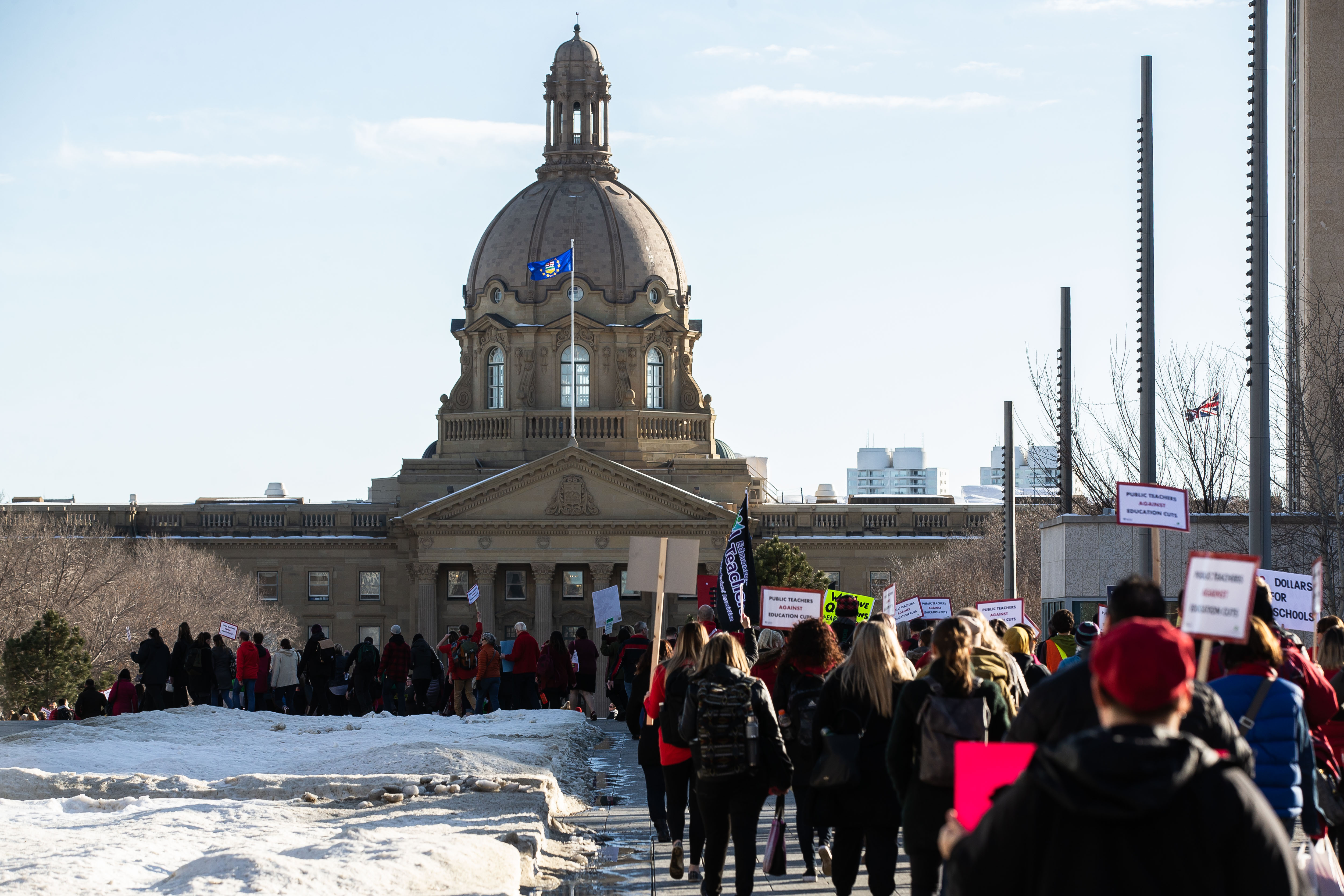
The UCP government took the extraordinary step of invoking the so-called “notwithstanding clause” to override teachers’ constitutionally protected right to strike and force a collective agreement on our province’s teachers.
The Alberta government used their power to:
- Strip teachers of the right to strike,
- Impose an unpopular collective agreement,
- Block legal challenges, and
- Limit free speech and democratic debate.
This is not a normal course of action for any government, even the UCP, and it is a clear signal that the Danielle Smith government has no respect for workers, our families, or our basic rights.
Legislation was NOT the only option for the government to resume classes. Other options include mediation or even binding arbitration. Instead, Premier Danielle Smith chose the most confrontational option, and consciously chose to declare a war on workers, unions and democracy.
Contrary to some online rumours, back-to-work legislation with a binding contract is not only a weapon against public sector workers. There is nothing about the notwithstanding clause that prevents it from being wielded against private sector workers, especially in industries considered vital to the province's economy.
The legacy of Bill 2 is a precedent that our constitutional rights as workers don't matter. We must act now to defend our rights and the rights of future generations of Alberta's workers.
Employment Standards
Alberta Bill 32: Trump-style Labour Law Comes to Alberta
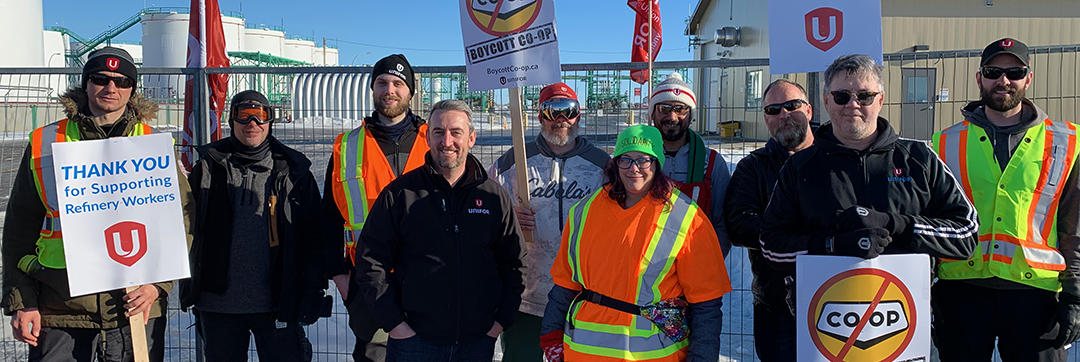
The UCP government has adopted legislation that, among other things, severely limits the bargaining and picketing rights of unions and aims to defund our public campaigns. It is an American-style attack on the fundamental goal of labour unions: to stand up for the rights of working people.
Learn more:
Overtime Averaging
Bill 32 permits overtime pay or time-off entitlements to be averaged over a 52-week period. Extending hours of work averaging to such an extreme length suggests the policy goal is to minimize overtime costs for employers and rob workers of earnings.
Before Bill 32
The Code formerly permitted an hours of work averaging agreement to be made by an employer and employees. Hours of work can be averaged over a maximum of 12 weeks for purposes of calculating overtime pay or time-off entitlements.
After Bill 32
Under Bill 32, the Code will permit an employer unilaterally to implement a written “averaging arrangement” for employees not covered by a collective agreement. An averaging arrangement can average hours of work over up to 52 weeks without a variance or exemption.
EXAMPLE
Before Bill 32 a non-union worker works 540 hours (45 hours per week) between January 1 and March 31. Under a 12-week averaging arrangement, the worker is owed 60 hours of overtime pay.
Under Bill 32, the employer can average out the extra 60 hours over the entire year. This allows the employer to average the accrued overtime hours to slower periods.
Download Fightback Factcsheet Issue #7 - Bill 32 and Overtime Averaging
Grievance and Arbitration
Bill 32 makes subtle changes to the Labour Code that restrict arbitrators’ power and gives more power to the UCP-appointed Labour Board.
Before Bill 32
The Labour Board may review awards only in special circumstances.
After Bill 32
These U.S. type changes allow a politicized Labour Board to intervene in normal labour relations and employer lawyers will be urging them to review and set aside awards, without the existing reference to grounds of fair hearing denial, or unreasonableness.
Download Fightback Factsheet Issue #8 - Bill 32 and Arbitration
What else has changed?
Here is a summary of some of the more radical changes proposed in Bill 32:
- imposes time-consuming financial reporting requirements for local unions
- making union dues for core union advocacy* optional (*as defined by the government)
- reduces secondary picketing rights
- limiting arbitrators’ discretion
- lowers the legal age of work to 13 years old
Where else have these laws been implemented?
Most of the changes proposed in Bill 32 are unprecedented in Canada. They are more common in southern U.S. states where they have had the effect of reducing unionization rates and keeping wages artificially low.
Why now?
The UCP’s economic recovery plans are failing. Alberta has lost 50,000 jobs since the election. Workers have been vocal critics of privatization and tax cuts, and now he’s moving to silence us. The summer pandemic has also provided him an opportunity to move quickly while other news captures the headlines and workers are tied up with health and financial issues.
Download the Bill 32 Factsheet
Download the Bill 32 Cheatsheet
For further reading
Health & Safety
Alberta Bill 47: A fundamental attack on workplace health and safety
Bill 47 was tabled on November 5, 2020 to amend the Workers Compensation Act and replaces the Occupational Health and Safety Act in its entirety. It contains major revisions of health and safety regulations, all of them cut corners and roll back workers rights for the exclusive benefit of employers.
Learn more:
- Injured Workers’ Benefits
- Reinstating Injured Workers
- Safety Training
- Medical Review Panels
- Joint Health and Safety Committees
- Changes to Your Right to Refuse Unsafe Work
Bill 47 removes many legal responsibilities of employers to workers. One change is the removal of the critical responsibility for employers to pay health and dental benefits to workers off work resulting from an injury on the job.
The diminished financial responsibility of employers to injured workers is a key factor in making all workplaces more dangerous.
Before Bill 47
Employers were required to pay health benefits for injured workers while they were absent from work or unable to perform their regular duties due to a work injury for up to one year following the accident. Injured workers were entitled to the same benefits they had before the accident.
Typically, worker’s spouse, adult interdependent partner, or dependants covered under the worker’s health benefit plan were also eligible for continued coverage after the accident.
Employers that did not extend health benefits were penalized.
After Bill 47
Employers will no longer have to contribute to health benefit plans (typically covers family) for injured workers who are off work. This cost will be borne by the injured workers.
Eliminating the financial responsibility for injured workers’ benefits reduces employers’ incentive to make workplaces safe for workers.
This will return Alberta to the pre-2017 culture of unreasonably denied WCB claims.
Download Fightback Factsheet Issue #6 - Bill 47 and Injured Workers' Benefits
One of the key changes in Bill 47 is the removal of an employer’s obligation to re-employ injured workers when they are ready to return to work.
The omnibus bill puts employer profits ahead of workers’ health and safety and would return the Workers Compensation Board to a corporate model that denies many injured workers the compensation to which they are entitled.
Before Bill 47
Employers are obligated to reinstate an injured worker and accommodate them.
After Bill 47
Employers will not be legally obligated to reinstate an injured worker. Employers may do so voluntarily.
Employers have a duty to accommodate disabled workers through human rights legislation. This is typically a lengthy (approx. two years) reinstatement process with the Human Rights Commission. During the process, WCB can reduce or terminate an injured worker’s benefits via a process known as “deeming”.
While employers technically have an obligation to accommodate injured workers, Alberta no longer provides an effective way for workers to appeal when employers fail to meet this obligation.
Download Fightback Factsheet #5 - Bill 47 and Reinstating Injured Workers
Bill 47 upsets the well-established “hierarchy of controls” (elimination, substitution, engineering or administrative controls). Instead of properly mitigating workplace hazards, it dramatically shifts the training onus onto workers instead of employers.
Before Bill 47
Clear legislative requirement that employers ensure workers are adequately trained to protect their health and safety: before the worker begins performing a new work activity; uses new equipment; performs a new process; or is moved to a different work site.
After Bill 47
Only imposes the more general requirement that employers must ensure workers are adequately trained in all matters necessary to perform their work in a healthy and safe manner.
Download Fightback Factsheet #4 - Bill 47 and Safety Training
The workers’ compensation system is the product of a special compromise between workers and employers—one that is nearly a century old in Alberta. It is not a system designed around an “us versus them” approach, but rather “we’re all in this together”. Bill 47 threatens to radically alter workers’ role in health and safety oversight. Medical review panels will also be dismantled with the goal of saving government expenses rather than compensating injured workers.
Before Bill 47
Medical panels are used by the workers’ compensation system to provide an impartial, independent decision-making process to resolve disagreements in medical opinion that arises between workers and the Workers’ Compensation Board (WCB).
After Bill 47
The medical panels would be abolished. Instead, the WCB would assume responsibility for compiling a roster of physicians to conduct medical examinations as directed by the WCB.
Download Fightback Factsheet #3 - Bill 47 and Medical Review Panels
Joint Health and Safety Committees
One of the most important battles Alberta workers have won is the right to be involved in the workplace decisions that impact our safety. This generally takes the form of a joint health and safety committee with equal representation from workers and the employer.
After all, if strong health and safety provisions are not in place and enforced by the employer, it is workers who are in danger. Too many workplace fatalities could have been prevented with more proactive planning with direct input from workers on the job.
Alberta Bill 47 proposes radical changes to the workplace health and safety laws, including the thousands of joint health and safety committees (JHSCs) across the province.
Before Bill 47
- All employers and worksites with more than 20 employees must have a JHSC
- Mandatory committee member training
- Workers select their representatives
- JHSC involved at every stage of prevention
After Bill 47
- Many worksites with more than 20 workers exempted from JHSC requirement
- No training requirements
- Unclear how worker representatives are selected
- Limited JHSC involvement and roles
Download Fightback Factsheet #2 - Bill 47 and Joint Health and Safety Committees
You have a right to refuse to perform any work you think will injure you or your fellow workers, but Bill 47 rolls back your right to refuse unsafe work:
Before Bill 47
- Your employer must tell you if the work you’re assigned has been refused by somebody else for safety concerns.
- You can refuse unsafe work that has “dangerous conditions”.
- Workers who have refused unsafe work participate in the workplace investigation.
- If you are disciplined by the employer, you can file a complaint with a provincial Occupational Health and Safety Officer.
Before Bill 47
- Your employer is only required to tell you after the other worker has contacted Occupational Health and Safety Alberta, which can only happen after the employer has written a report.
- You can only refuse unsafe work if is an “undue hazard”, a far higher standard that includes an “immediate threat” requirement. This likely excludes your ability to refuse work that could result in a COVID-19 exposure, since the illness will not manifest immediately.
- No requirement exists to involve the worker or their union in the investigation.
- Unionized workers may only use the grievance process. In some workplaces, this is could be a significant new administrative burden.
Download Fightback Factsheet #1 - Bill 47 and The Right to Refuse Unsafe Work
Free Speech
Alberta Bill 1: Silencing the Government's Critics
The so-called "Critical Infrastructure Defence Act" is an unprincipled attempt to criminalize dissent that you might expect to see in countries suffering under dictators rather than a Canadian province.
The limits placed on peaceful protest and free speech in Bill 1 are almost certainly doomed to fail when court appeals are finally resolved, but the UCP government knows that. Silencing critics and undermining opposition, even temporarily while court cases crawl through the system, is a heavy-handed tactic to use the power of government to bully its own citizens.