

Share
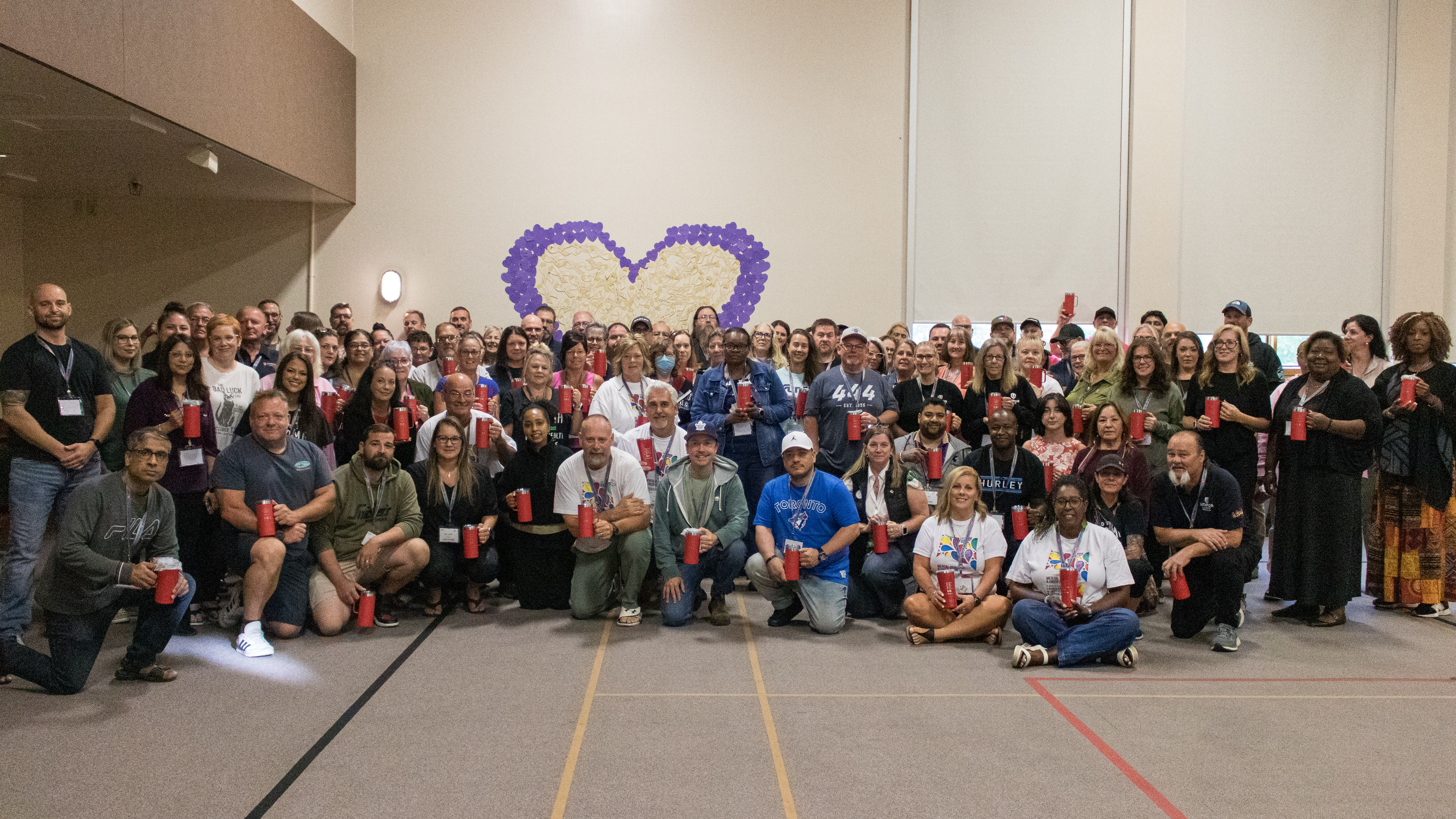
Local union Employee and Family Assistance Program (EFAP) representatives gathered for the biennial Unifor EFAP Conference at the Family Education Centre in Port Elgin, Ont., September 11 to 13. The conference delegates left with two skills: the practice of asking a member directly whether they are thinking about suicide, and a plan for taking mental health and addiction demands to every level of government.
"Many of you are the first point of contact for members when they need somebody to turn to," said Unifor Ontario Regional Director Samia Hashi. "You're the ones getting the texts and the phone calls late at night, sitting with our members through some really difficult moments, and doing that work quietly and usually without much recognition."
Hashi pointed to a mental health and addictions resolution that Ontario Regional Council passed in December with overwhelming support. It directs the union to strengthen EFAP training and lobby governments for mental health and addiction services that people can actually access, with supports for families built in. Hashi said the conference was where that work had to begin because EFAP reps see the gaps first.
Suicide prevention training came early the first day. The facilitator had delegates turn to the person next to them and ask, "Are you thinking about suicide?" The point was to get the question out of people's mouths, because the ones who most need to be asked are the ones no one asks. Delegates also went through what to do if the answer is yes: call 988 and stay on the line with the member until a crisis worker picks up. Afterward, everyone wrote a message on a yellow ribbon or a purple paper heart and pinned it inside a large heart on the wall. This powerful display remained up for the duration of the Council.
Camille Quenneville, CEO of the Canadian Mental Health Association, Ontario Division, gave delegates the stark numbers. Demand for community mental health services is up 21% since the pandemic, the workers delivering them are paid 30% less than hospital staff, and Ontario still loses seven people a day to opioid overdose. She pointed to CMHA's crisis centre in London, where police and paramedics can connect someone in crisis to a mental health worker in about 17 minutes instead of waiting six hours in an emergency department, and asked for Unifor's help renewing the federal government's $10 billion mental health and addictions agreement before it runs out next year. Unifor provided a $2,500 donation to assist CMHA Ontario in its vital work.
Delegates also heard from a panel on lobby efforts on mental health and addiction. Sue McKinnon, Women's Committee Chairperson at Local 444, described how delegations in Windsor pushed city council to approve $192,000 for 12 more beds at the Welcome Centre Shelter for Women and Families, Women's Department Director Tracy Ramsey read a message from Local 240 President Jodi Nesbitt, whose local brought the resolution to Ontario Regional Council, outlining a decade of fighting a system that failed her son, and how 35 years in the union taught her to organize families and get in front of politicians. Director of Indigenous Relations Gina Smoke and Jensen Williams of Unifor's Membership Mobilization and Political Action Department rounded out the panel.
Workshops covered critical incident and post-traumatic stress, psychosocial hazards in the workplace, tough conversations and Unifor's Mental Health Matters program. The weekend ended with a self-care session led by Yolanda Cornwall and an Indigenous Healing Ceremony led by Doran Ritchie of Saugeen First Nation.
Unifor National Secretary-Treasurer Len Poirier closed the conference Sunday morning.
"Every one of you took on this role because a co-worker needed someone and you stepped up. That is what this union is," said Poirier. "Our job at the national level is to make sure you have the training, the resources and the backing to do that work, and to keep mental health on the table every time we bargain."
Unifor National Representative and Mental Health Advocate Mike Byrne reminded delegates the training does not stop at Port Elgin. Locals can run Mental Health Matters and WRAP (should put full name before WRAP acronym), and some have already bargained employer-paid mental health first aid and ASSIST suicide intervention training into their collective agreements.
If you or someone you know is struggling, call or text 988.