

Share
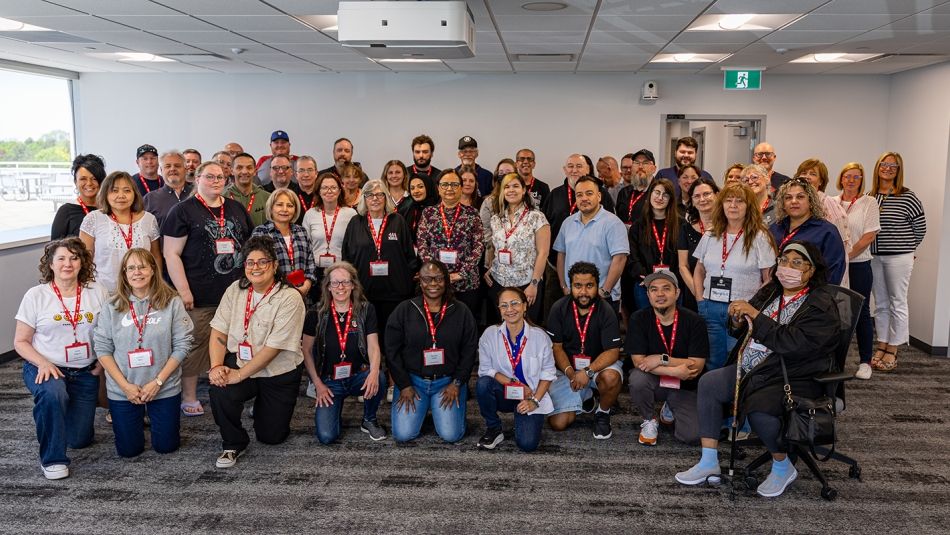
More than 70 local activists from across the hospitality sector gathered at the Unifor National Office in Toronto May 19–22 for a national bargaining strategy conference, bringing together local leaders, staff, and national officers from almost every province to shape Unifor’s bargaining strategy and priorities in the hospitality sector across Canada.
“Unifor members across the country do incredible work in the hospitality sector,” said Unifor National President Lana Payne. “This conference will help propel our bargaining work so that we can continue to win industry-leading agreements for our members.”
The conference covered a wide range of topics: industry structure and bargaining strategy, health and safety rights, organizing, communications and member mobilization, women in hospitality, pension and benefits, and the development of a new bargaining tool kit.
Ontario Regional Director Samia Hashi brought greetings and a clear message about the stakes. She pointed to the real-world toll of U.S. tariffs and trade instability on hospitality, tourism, and food supply chains, and tied the conference's work directly to Unifor's Protect Canadian Jobs campaign. She highlighted the resolution of the CN Tower lockout as proof of what solidarity delivers. "Employers like CN Tower are going to think twice before messing with Unifor hospitality workers," she said.
Hashi also pressed on the urgency of organizing, reminding delegates that hospitality workers, including young workers, migrant workers, and racialized workers, are often joining a union for the very first time. "Canadian workers cannot be collateral damage in political and economic disputes," she said. "We need a workers-first plan that ensures our independence and economic survival."
Delegates heard from Unifor leaders in the research, health and safety, pension and benefits, organizing, communications, member mobilization, who provided hospitality-specific tools and best practices that can be applied in hospitality workplaces. Delegates brainstormed bargaining priorities and model bargaining language on a variety of key issues in the hospitality sector.
The conference closed Friday with a full debrief, sending delegates home with a plan to develop a bargaining tool kit and a clearer collective strategy to fight for the workers who keep Canada's hospitality sector running.