
Share
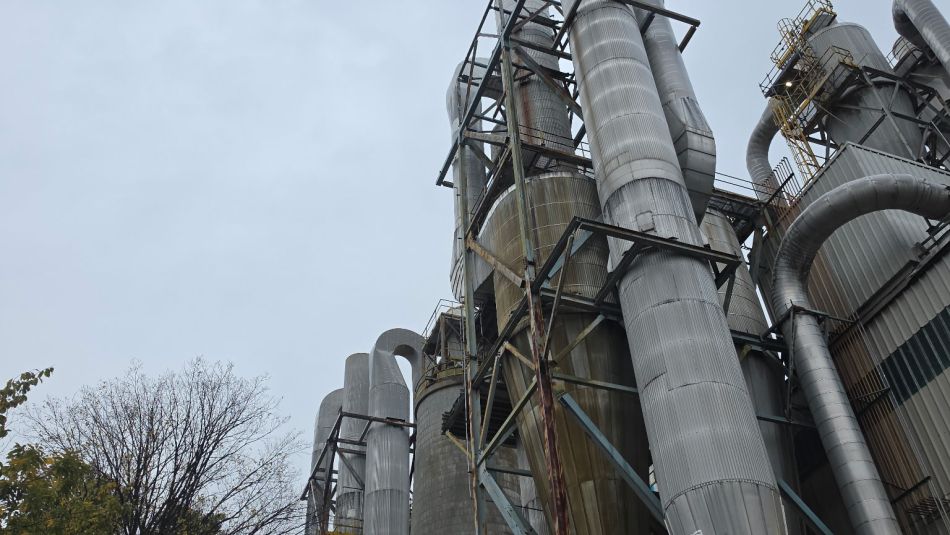
On the morning of October 4th, the last Unifor members finished their shifts at the RYAM mill in Témiscaming. After weeks of uncertainty and an initial postponement of the shutdown announced by the employer, production has now officially come to a halt.
Since then, no steam has risen from the mill’s stacks — an unusual sight in Témiscaming that reflects a much more difficult reality. Approximately 300 workers are now off the job, while a small number of employees will remain on site to maintain essential operations and the facility during the production shutdown.
The economic shutdown was first announced in late August. Initially scheduled for mid-September, it was later postponed until early October.
For Unifor, the growing number of production curtailments across the forestry sector raises a much broader concern about the future of Canada’s industrial capacity and the communities that depend on it.
“When we lose production capacity, it’s not just jobs that are at risk. We also risk losing expertise, infrastructure and industrial communities that would be extremely difficult to rebuild. Governments need to act now to protect forestry jobs and ensure this strategic industry has a future in Canada,” said Unifor National President Lana Payne.
An industry under pressure
The situation in Témiscaming comes at an extremely difficult time for Quebec’s forestry sector. For months, communities across the province have faced a growing number of production slowdowns, curtailments and closures.
“The production shutdown is a serious blow, but for us, this is certainly not the end of the story. Several scenarios are currently on the table to secure the future of the mill and restart operations. Our job now is to make sure every possibility is fully explored and, most importantly, that viable options are turned into action. We will keep pushing, bringing the key players to the table and maintaining pressure to move from discussions to concrete action. Our members and the entire Témiscaming community can count on us: we are not giving up,” said Unifor Quebec Director Daniel Cloutier.
Members of Unifor Local 233 are now living with uncertainty about their future.
“Despite all the uncertainty of the past few weeks, our members continued to show up until the last shift to do their jobs, just as they always have. Now, production has stopped and the reality is hitting home. Behind this shutdown are hundreds of workers and families wondering when they will be able to return to work,” said Unifor Local 233 President Stéphane Lefebvre.
Unifor’s priority remains supporting members through this difficult period while working to protect jobs and secure the future of the mill. The union and the employer are also working to implement the federal Work-Sharing Program.
National Day of Action for Forestry on October 16
The situation takes on added significance as Unifor prepares for its National Day of Action for Forestry on October 16. Across the country, Unifor members and forestry communities will mobilize to underscore the importance of protecting jobs, supporting communities that depend on the industry and securing a future for Canada’s forestry sector.
In Témiscaming, these issues are no longer theoretical. Hundreds of workers and their families are now living this reality every day.
Unifor will continue working with its members and stakeholders to find solutions that can secure the future of the Témiscaming mill.