
Share
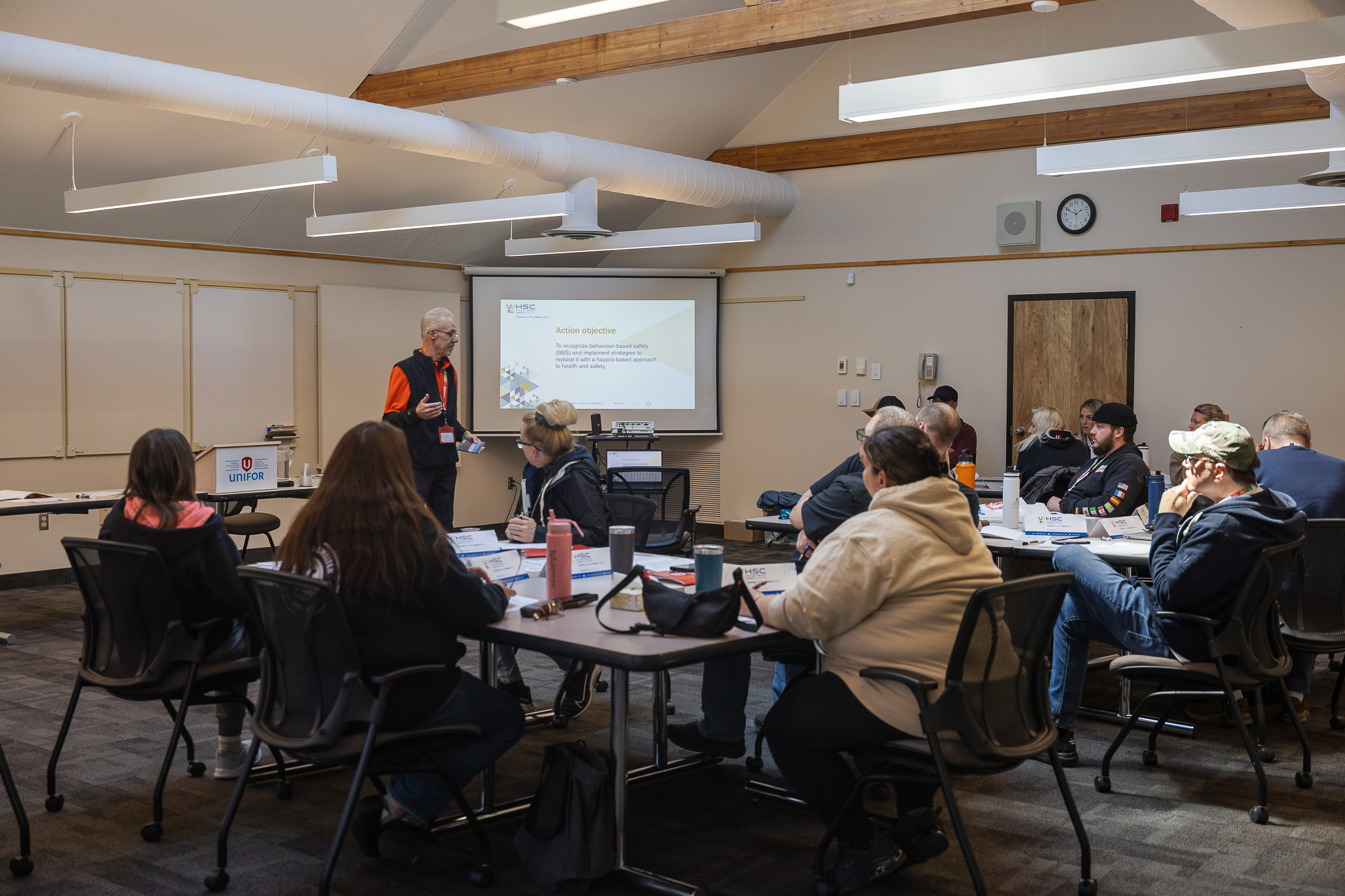
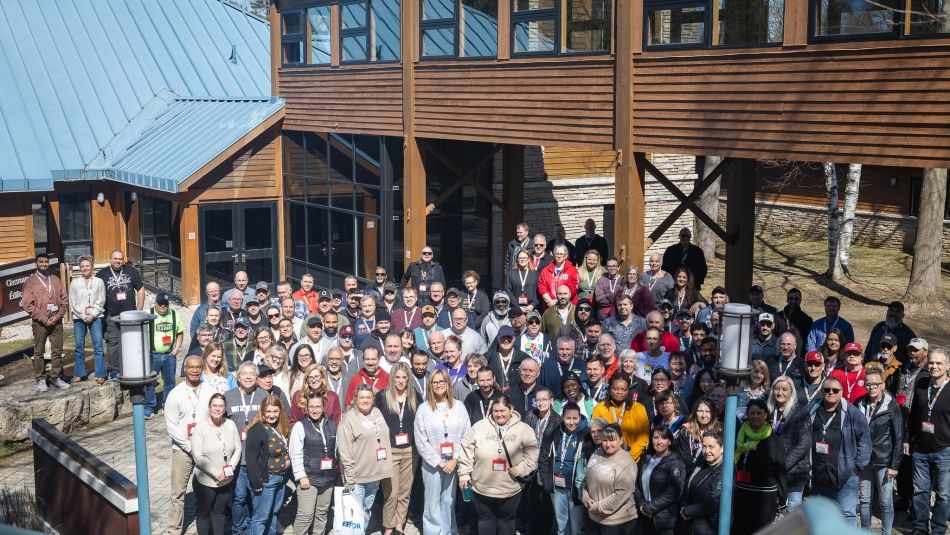
Strong workplace inspection and investigation skills are essential to protecting workers and preventing injuries and illness. From April 10 – 12 2026, more than 140 Unifor members joined the National Health and Safety Conference to build these skills.
The conference took place at Unifor’s Family Education Centre in Port Elgin under the theme, Root Cause, Real Change, with a focus on moving beyond surface-level symptom management, and towards identifying the root causes of unsafe conditions to eliminate hazards and create safer workplaces.
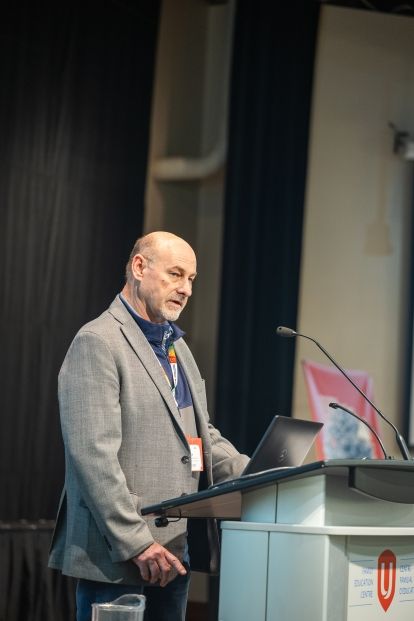
Joanne Hay, Unifor’s Director of Health, Safety, and Environment, opened the conference by inviting delegates to be the voice of prevention in an era of rapid technological change and increasing mental health pressures.
Unifor National Secretary-Treasurer Len Poirier, shared the power of solidarity in health and safety work.
“Health and safety belong to everyone, and the strength of the work comes from solidarity,” said Poirier, reminding members of the support that Unifor provides throughout the union. “This room is filled with knowledge, experience, and wonderful commitment. Lean on that. Share your stories, ask questions, build connections, because we’re all stronger when we stand together.”
Delegates demonstrated the strength of solidarity as they participated in a moment of silence to honour Unifor members who lost their lives to workplace incidents since the last gathering.
We remember,
Peter Lecerf, Local 4050
Sam Brouwer, Local 4268
Sean McKim, Local 591G
Keith Gordon, Local 114
Tyrone McLeod, Local 892
Simon Gagnon, Local 3057
Following this somber moment of remembrance, Hay led a fireside chat with Jody Young, President and CEO of Workplace Safety and Prevention Services. With more than 35 years of experience, including roles as a frontline inspector and Assistant Deputy Minister in Ontario and Alberta, Young shared personal insights on how worker representatives can make real change in the workplace.
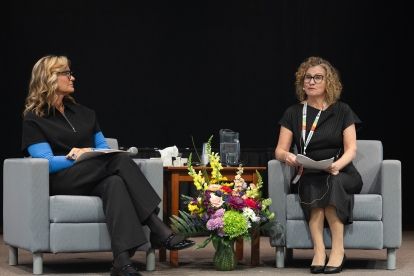
“Health and safety representatives are the eyes and ears of the Ministry inside your workplace,” said Young, outlining the important role health and safety representatives play from establishing culture, to prevention. She encouraged participants to, “[use] the courage that you have and the empowerment that you have within your workplace to make change.”
Day two of the conference focused on practical aspects of identifying hazards. Terry Anonson, a retired Primary Investigator with WorkSafeBC’s Occupational Health and Safety investigations unit, shared lessons from a career that included leading investigations into more than 20 forestry-related fatalities. Anonson’s extensive regulatory background paired with hands-on experience provided delegates with a unique perspective on why incidents happen and how to challenge employer assumptions.
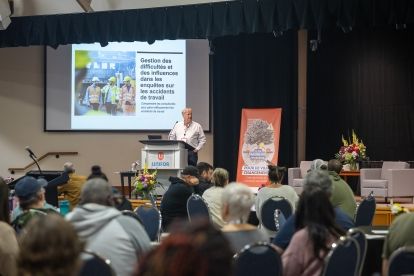
Anonson discussed identifying safety significant events, defined as one actor, one action, and involving a decision. He shared how they can provide deeper insights into workplace incidents. “If you take that event out, the accident doesn’t happen, that’s where you start,” said Anonson. “Once you have your significant events laid out in your sequence of events, now you start drilling down.”
In the afternoon, delegates participated in specialized breakout sessions covering a wide range of topics related to modern safety challenges. This included sessions on nanotechnology and the future of safety, the myth of worker carelessness, emergency preparedness, and mental health.
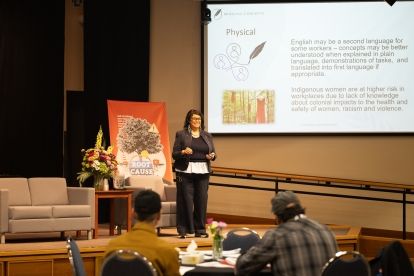
The final day of the conference provided new perspectives on advocating for workplace safety. Trina Maher, President of Bridging Concepts and a member of Mattagami First Nation shared a presentation on health and safety through an Indigenous lens. Maher reminded delegates that, “reconciliation is not something just for Indigenous people, and it’s not just for governments, and it’s not just for companies. Each and every one of us can play that role.”
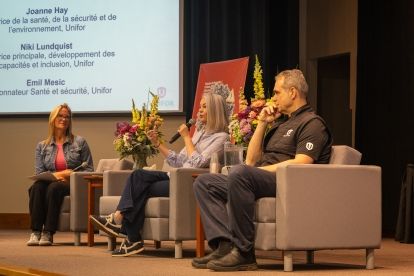
The conference concluded with a panel discussion featuring Niki Lundquist, Senior Director of Capacity Building and Inclusion, and Emil Mesic, Health and Safety Training Fund Coordinator. Speaking on advocacy versus discipline, Lundquist and Mesic discussed the legal protections available to workers who face employer intimidation for raising safety concerns.
After a weekend of deep and meaningful discussions, delegates went home with new tools, stronger networks and a renewed determination to advocate for workplaces that keep everyone safe and healthy.
For more information and resources to support your health and safety committee, visit unifor.org/healthandsafety or email @email.
See photos from the weekend on Unifor’s Facebook page.