

Share
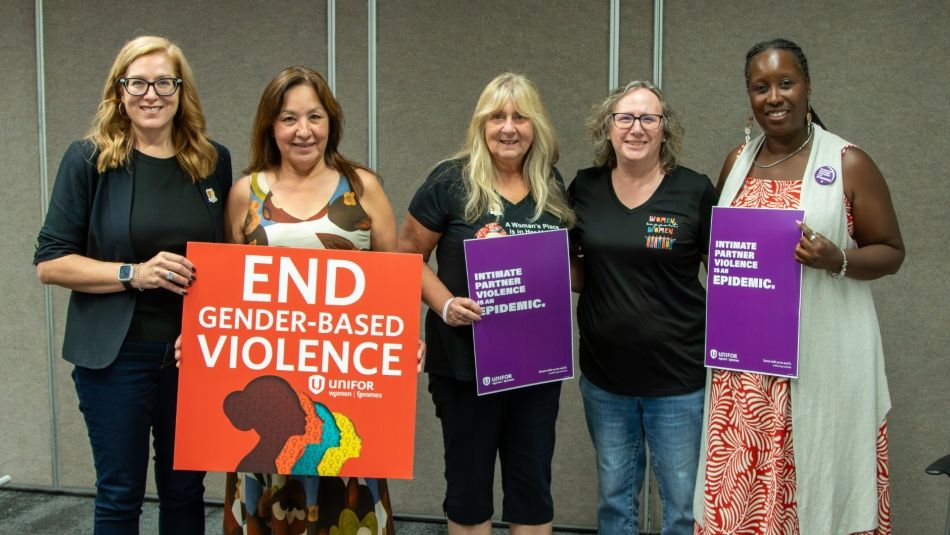
On June 24 at the New Westminster Office, more than 100 Unifor members, survivors and community front line service providers participated in an Intimate Partner Violence (IPV) Symposium hosted by the B.C. Regional Women's Committee and the Unifor Women's Department.
Western Regional Director Gavin McGarrigle opened the meeting with greetings and enthusiastically threw his support behind the conference and Unifor's ongoing campaign: "Events like today and the incredible turnout show that there are growing calls for change. For governments to do better, to change the environment where this hatred and violence festers, to educate, to enforce, and to create a society where everyone is safe. The work continues sisters and Unifor will stand right there with you. As a leader, as a trade unionist, as a man, as a husband, and as a father, I will always stand with you and beside you in these struggles," he said.
Women's Department Director Tracey Ramsey followed and spoke to the work being done by Unifor to enshrine Women's Advocates in collective agreements. Unifor locals have bargained more than 780 advocates across the country. The role is supported with a 40-hour intensive training and a yearly update. It is recognized by the UN and has been patterned in unions across the globe.
Ramsey also reviewed recent announcements by several provincial governments to declare IPV and GBV an epidemic, including Newfoundland & Labrador.
"Declaring an epidemic isn’t just symbolic. It’s a commitment to funding the services women rely on to survive—shelters that are full, counselling programs stretched beyond capacity and transition houses that are trying to get funding to fill the gaps."
The symposium included the hands-on workshop that the Women's Department has implemented across the country. It combines education about the scope of the IPV epidemic and empowers participants to learn about types of abuse and brainstorm strategies for systemic change.
Many community participants represented organizations such as shelters, sexual assault support networks, or other advocacy groups. Tables were set up so participants could meet and network with each other.
The afternoon hosted a variety of high profile, respected speakers, starting with B.C. Minister of Labour Jennifer Whiteside. The minister commended Unifor for assembling the organizations fighting gender-based violence and vowed to continue being an advocate at the cabinet table.
Gina Edwards, Executive Director of the B.C. Native Women's Association reviewed the role of colonialism and residential schools in oppressing Indigenous Peoples and building a culture of violence, especially against women. She also called out the criminal justice incarceration system and the child welfare system for the gross inequity and over-representation of Indigenous Peoples. This over-representation and over-policing is a key factor in the under-reporting of Intimate Partner Violence in many Indigenous communities.
Ramsey emceed an afternoon panel of activists and experts in the area of fighting gender-based violence:
- Shahnaz Rahmam, Executive Director of the Surrey Women's Centre
- Angela Marie McDougall, Executive Director of the Battered Women’s Support Services and expert panelist for the Canadian Femicide Observatory for Justice and Accountability
- Emmy Skates, Chief Executive Officer of SARA for Women
Panelists discussed each organization's unique history and essential work and how collaborating and community-based solutions are critical to being successful in this joint campaign to end IPV.
The day finished with a presentation by Kamal Dhillon, an award-winning author and inspirational speaker who shared her story of domestic violence. She discussed the many cultural and systemic barriers to properly addressing IPV and believing women.
Learn more about the campaign: Declare Intimate Partner Violence an Epidemic
View the Facebook album.