

Mary Simon: First Indigenous Governor General (sworn in 2021).
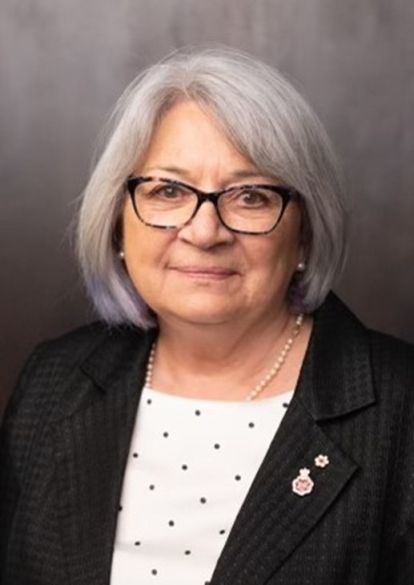
Mary Jeannie May Simon (Ningiukudluk), CC, OQ 30th governor general of Canada, diplomat, civil servant, (born 21 August 1947 in Kangiqsualujjuaq, Nunavik, QC). Mary Simon is an advocate for international cooperation in the Arctic and Indigenous education and rights. She has held multiple roles in the civil service, including secretary and co-director of policy of the Royal Commission on Aboriginal Peoples, secretary to the board of directors of the Northern Quebec Inuit Association, and member of the Nunavut Implementation Commission. She was also the first vice president of the Makivik Corporation and the first Inuk in Canada to hold the rank of ambassador. Simon has served as the president of Inuit Tapiriit Kanatami and of what is now the Inuit Circumpolar Council. On 26 July 2021, Simon became Canada’s 30th Governor General and the first Indigenous person to serve in that role.
*Mary Simon | The Canadian Encyclopedia
Justice Michelle O'Bonsawin: First Indigenous Supreme Court of Canada justice (2022).
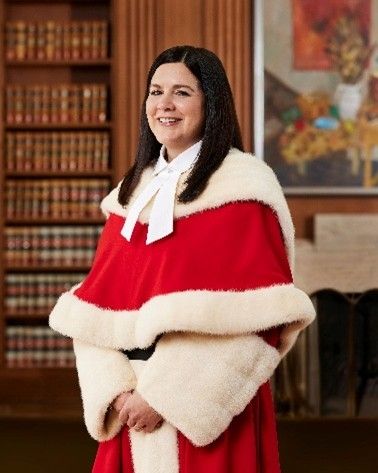
Michelle O’Bonsawin, justice of the Supreme Court of Canada, lawyer, law professor (born in 1974 in Hanmer, Ontario). Michelle O’Bonsawin was appointed to the Supreme Court of Canada on 1 September 2022, making her the first Indigenous justice to serve on the Court. An Abenaki member of the Odanak First Nation, O’Bonsawin is also Franco-Ontarian. She is known for her expertise on matters relating to Indigenous law and legal issues — in particular the Gladue principles — as well as labour, mental health and privacy issues.
*Michelle O’Bonsawin | The Canadian Encyclopedia
Frank Calder: First Indigenous person elected to a provincial legislature (BC, 1949).
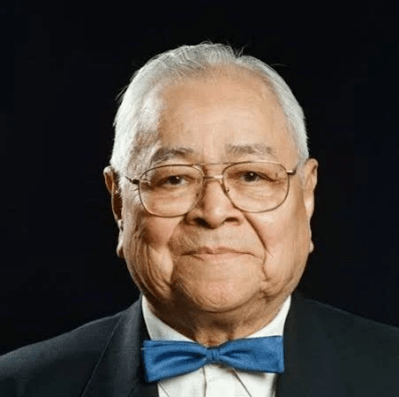
Frank Arthur Calder, OC, Nisga’a politician, chief, businessman (born 3 August 1915, Nass Harbour, BC; died 4 November 2006 in Victoria, BC). Frank Calder was the first Indigenous member of the BC legislature, elected in 1949. Calder is best known for his role in the Nisga’a Tribal Council’s Supreme Court case against the province of British Columbia (commonly known as the Calder case), which demonstrated that Aboriginal title (i.e., ownership) to traditional lands exists in modern Canadian law.
*Frank Calder | The Canadian Encyclopedia
Alfred Scow: First Indigenous judge in British Columbia (1971).
On September 13, 1971, Alfred Scow, hereditary chief of the Kwicksutaineuk First Nation on Gilford Island, was appointed a judge of the BC Provincial Court. He brought a unique combination of determination, diligence, integrity, diplomacy, altruism, patience, humility, humour, and dignity to the Court and to his ground-breaking work for Indigenous peoples and the wider community.
Charlotte Edith Anderson Monture: First Indigenous woman to become a registered nurse in Canada and gain the right to vote in a federal election.
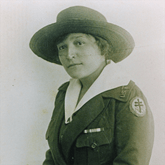
Charlotte Edith Anderson Monture traveled far and wide to become a registered nurse. Her determination paid off, and she was the first Native Canadian registered nurse. It was illegal for Native Canadians to get a diploma after elementary school, so Monture had to move to the United States for nursing training. Monture found a way to receive an education and served as an Army nurse during the first World War. She is also reported to be the first Native Canadian woman to receive the right to vote in a Canadian federal election.
*Biography: Charlotte Edith Anderson Monture
Pauline Johnson: First woman to be featured on a Canadian stamp.
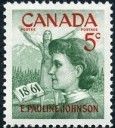
Pauline Johnson (1861–1913), was a Canadian poet. She was born in Ontario to an English mother and Mohawk father. While she was growing up her family was relatively well off and she was encouraged to study both sides of her ancestry in depth. Her poetry was only well recognized after her death from breast cancer and she never really benefited financially from her artistic works. She was the first woman (other than a monarch) and Native American to be commemorated on a Canada stamp. (1961)
*Famous Canadian women on stamps Part One:1961-1992 - The Stamp Echo
Elsie Knott: First elected female First Nations chief in Canada.
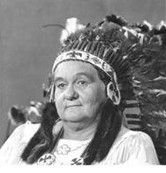
Elsie Marie Knott (née Taylor), Ojibwe chief, community leader, entrepreneur (born 20 September 1922 on Mud Lake Reserve [now Curve Lake First Nation], ON; died there on 3 December 1995). Knott was the first elected female First Nations chief in Canada, after a 1951 amendment to the Indian Act permitted Indigenous women to vote and participate in band governments. She was also chief of her First Nation for 14 years, from 1954 to 1962 and from 1970 to 1976. Knott was dedicated to preserving the Ojibwe language and was known for her community activism and support of education.
*Elsie Knott | The Canadian Encyclopedia
Nellie J. Cournoyea: First Indigenous woman to lead a provincial or territorial government in Canada.
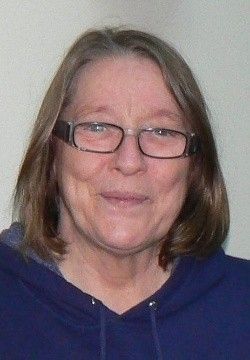
Nellie J. Cournoyea, OC, ONWT, premier of the Northwest Territories 1991–95, politician (born on 4 March 1940 in Aklavik, NT). Cournoyea was first elected to the legislature of the Northwest Territories in 1979 as a member for the Western Arctic riding, and then for the Nunakput riding. She held numerous cabinet portfolios, including health and social services and energy, mines and resources. In November 1991, she became the first Indigenous woman to lead a provincial or territorial government in Canada.
*Nellie J. Cournoyea | The Canadian Encyclopedia
Wab Kinew: First Indigenous premier of a Canadian province.
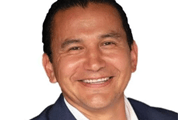
Wabanakwut Kinew, premier of Manitoba 2023-present, hip hop artist, broadcaster, university administrator, author, politician (born 31 December 1981 in Kenora, ON). An Ojibwa activist and public intellectual, Wab Kinew began his career as a musician and rapper with the hip hop group Dead Indians. He gained national attention through his radio and television journalism for the CBC, including 8th Fire, a television series on Indigenous issues. Kinew’s 2015 memoir, The Reason You Walk, was a national bestseller and finalist for the RBC Taylor Prize. Kinew was elected to the Manitoba legislature in 2016, despite controversial tweets and rap lyrics that dogged his campaign. Similarly, revelations of stayed domestic assault charges from 2003 threatened to derail his bid to become leader of the Manitoba New Democratic Party, though he was named leader in September 2017. In 2023, Kinew became the premier of Manitoba.
*Wab Kinew | The Canadian Encyclopedia
Fred Sasakamoose: First Indigenous player from Canada in the NHL.
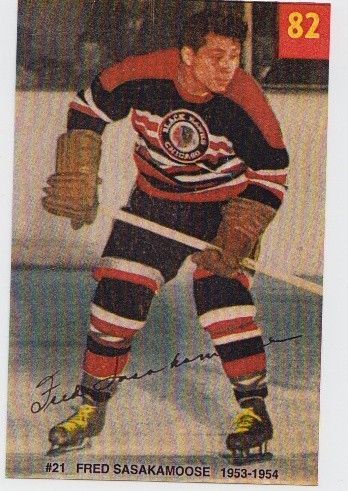
Frederick (Fred) George Sasakamoose, CM, hockey player, Elder, community leader (born 25 December 1933 at Whitefish Lake, now Big River First Nation, SK; died 24 November 2020 in Prince Albert, SK). Elder Fred Sasakamoose was one of the first Indigenous hockey players from Canada in the National Hockey League (NHL). A former student of St. Michael’s Indian Residential School in Duck Lake, Saskatchewan, he played 11 games for the Chicago Black Hawks in the 1953–54 NHL season. After his retirement from competitive hockey in 1961, he dedicated himself to encouraging youth through sports involvement. A Member of the Order of Canada, he was inducted into the Saskatchewan First Nations Sports Hall of Fame, the Saskatchewan Sports Hall of Fame, the Saskatchewan Hockey Hall of Fame, the Prince Albert Hall of Fame, the Canadian Native Hockey Hall of Fame and the North American Indigenous Athletics Hall of Fame.
*Fred Sasakamoose | The Canadian Encyclopedia
*Inductees « Saskatchewan Hockey Hall of Fame
Jordin Tootoo: First Inuk hockey player to play in the National Hockey League (NHL).
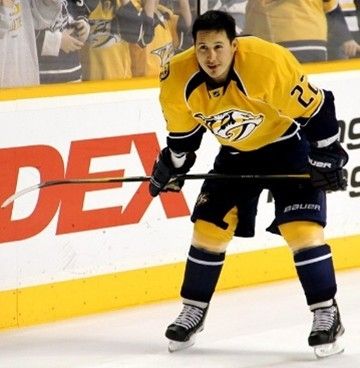
Jordin John Kudluk (Thunder) Tootoo, hockey player (born 2 February, 1983 in Churchill, MB). Jordin Tootoo is the first Inuk hockey player to play in the National Hockey League (NHL). Jordin got the attention of the NHL as a tough, talented right-winger in his junior hockey days in Manitoba. In 2003, he received national attention when he played for Team Canada at the World Junior Hockey Championship. After playing 13 seasons in the NHL, he retired in 2018. He is known for speaking to youth and maintaining his Inuit culture.
*Jordin Tootoo | The Canadian Encyclopedia
Tom Longboat: First Indigenous person to win the Boston Marathon (1907).
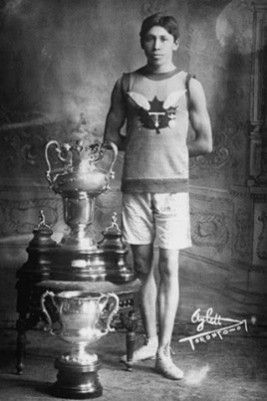
Thomas Charles Longboat (Gagwe:gih), distance runner, Olympian (born 4 July 1886 in Ohsweken, Six Nations of the Grand River; died 9 January 1949 in Ohsweken). Tom Longboat was an Onondaga distance runner from Six Nations of the Grand River. One of the most famous athletes of the early 20th century, Longboat pioneered training methods still used today. He is considered one of the first celebrity athletes in Canada, with his athletic successes known across North America and overseas. He was a leader in establishing marathon running as an international sport and won many marathons in record-breaking times, beating competitors from all over the world. Longboat was the first Indigenous person to win the Boston Marathon (1907). He competed for Canada at the 1908 Olympic Games. He was inducted into Canada’s Sports Hall of Fame and the Ontario Sports Hall of Fame.
* Tom Longboat | The Canadian Encyclopedia
Shirley and Sharon Firth: First Indigenous women inducted into Canada's Sports Hall of Fame.
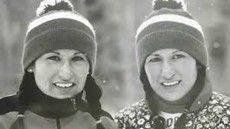
Shirley Firth, CM, cross-country skier (born 31 December 1953 in Aklavik, NWT; died 30 April 2013 in Yellowknife, NWT) and Sharon Anne Firth, CM, ONWT, cross-country skier (born 31 December 1953 in Aklavik, NWT). Twin sisters Shirley and Sharon Firth, members of the Gwich’in First Nation, were among the first Indigenous athletes to represent Canada at the Olympics. They were members of the first Canadian women’s Olympic cross-country ski team and competed at four Olympic Winter Games. They were members of the national cross-country ski team for an unprecedented 17 consecutive years. Between them, they won 79 medals at the national championships, including 48 national titles. The first Indigenous women inducted into Canada's Sports Hall of Fame, they are Members of the Order of Canada and have been inducted into the Canadian Ski Hall of Fame.
* Shirley and Sharon Firth | The Canadian Encyclopedia
Shaaw Tláa (Kate Carmack): Part of the group that discovered gold near the Klondike River in 1896, sparking the Klondike Gold Rush.
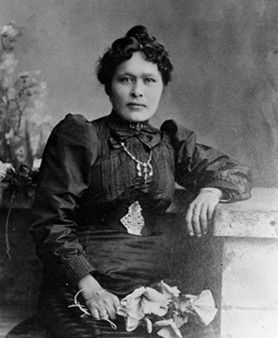
Shaaw Tláa (a.k.a Kate Carmack), (born c. 1857-1867 near present-day Bennett Lake, YT; died 29 March 1920 in Carcross, YT). A Tagish woman, Shaaw Tláa (pronounced Shaw Claw) was part of the group that discovered gold near the Klondike River in 1896, sparking the Klondike Gold Rush. She and her husband George Carmack, a white American, had spent a decade in search of gold in the Yukon. They made $1 million from their gold claim; however, George later abandoned her and she was unsuccessful in suing for her half of the fortune.
* Shaaw Tláa (Kate Carmack) | The Canadian Encyclopedia
Tanya Tagaq: First Indigenous Person to Win the Polaris Prize.
Tanya Tagaq Gillis, CM, throat singer, experimental musician, painter, novelist (born 5 May 1975 in Cambridge Bay, Nunavut). An experimental artist who has achieved a level of mainstream crossover success, Tanya Tagaq blends Inuit throat singing (traditionally done as a duet) with electronic, classical, punk and rock music. The New Yorker characterized Tagaq’s voice as, “guttural heaves, juddering howls and murderous shrieks,” and praised her work for its “fearless lack of inhibition, technical skill and mastery of tradition.” A Juno Award, Canadian Aboriginal Music Award and Polaris Music Prize winner, Tagaq is part of what has been called the “Indigenous Music Renaissance” — an innovative new generation of Indigenous artists in Canada. She is also an acclaimed author and a Member of the Order of Canada.
* Tanya Tagaq | The Canadian Encyclopedia
Murray Sinclair: First Indigenous Judge in Manitoba
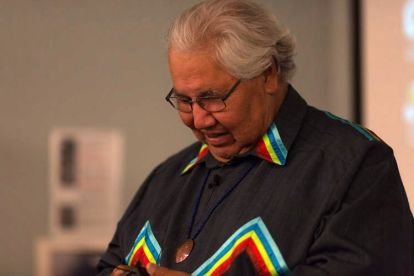
Calvin Murray Sinclair (CC KC OM MSC) was born on January 24 1951 in Selkirk, Manitoba, on the former St. Peter’s Indian Reserve, and grew up as a member of the Peguis First Nation. He earned a B.A. at the University of Winnipeg and a LL.B. from the University of Manitoba, where he was called to the bar in 1980. In 1988 Sinclair became Manitoba’s first Indigenous judge and the second in Canada, later serving as an associate chief judge of the Provincial Court and, in 2001, as the first Indigenous justice on the Court of King’s Bench.
From 2009 to 2015 he chaired the Truth and Reconciliation Commission of Canada, producing the landmark 94 Calls to Action that continue to shape national policy on residential school legacy. Appointed to the Senate of Canada on April 2 2016, he served until January 31 2021. Sinclair then became the 15th Chancellor of Queen’s University (2021 2024) and was named Chancellor Emeritus and Special Advisor on Reconciliation.
His contributions earned numerous honours, including Companion of the Order of Canada (2022), Member of the Order of Manitoba (2024), and over 30 honorary doctorates. Sinclair passed away on November 4 2024, leaving a lasting legacy of Indigenous rights advocacy, legal reform, and national reconciliation.
https://thecanadianencyclopedia.ca/en/article/murray-sinclair