
Share
MONTREAL — Unifor Quebec welcomes today’s Quebec Court of Appeal ruling in favour of Unifor Local 177 in the case involving CRH Canada Group’s cement plant in Joliette. By overturning the Superior Court’s judgment and reinstating the decision of the Administrative Labour Tribunal (ALT), the Court confirmed that, in the circumstances of this case, remote work cannot be used to circumvent the anti-scab provisions of Quebec’s Labour Code.
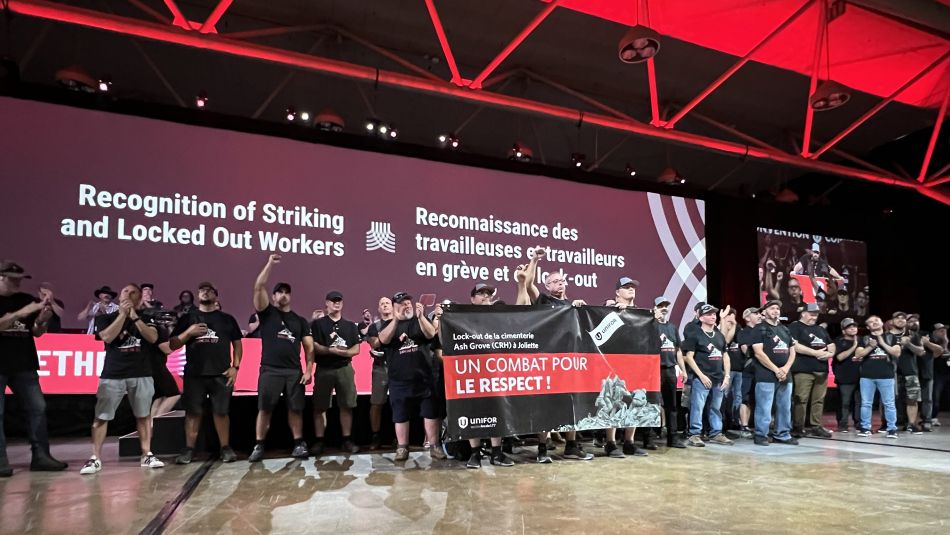
The dispute stems from a lockout imposed by the employer in June 2021. During the dispute, the company used a non-union employee attached to its Joliette establishment to remotely perform duties normally carried out by locked-out members. The employer argued that the prohibition on replacement workers did not apply because the employee was working from home.
The Court of Appeal concluded that the ALT could reasonably find that this practice violated the Labour Code. Working remotely, using the employer’s technology and under its authority, did not sever the employee’s connection to the Joliette establishment.
“An employer should not be able to do behind a screen what the law prohibits it from doing in its workplace,” said Unifor Quebec Director Daniel Cloutier. “Anti-scab protections must remain meaningful in the age of remote work. This victory protects workers’ bargaining power and their ability to negotiate better working conditions. I want to recognize the determination of Local 177, which led this fight.”
Protections must keep pace with the changing workplace
In its reasons, the Court emphasized that anti-scab provisions are intended to do more than reduce violence on picket lines. They also aim to restore the balance of power between employers and unions and make collective bargaining fairer by preserving the effectiveness of the right to strike.
The Court also recognized that tribunals can apply the law to new realities, including remote work. The concept of an establishment therefore cannot invariably be confined to the four walls of a building.
“This is a major victory for Quebec workers,” said Quebec Federation of Labour (FTQ) President Magali Picard. “The Court of Appeal has finally recognized the reality of work today: when someone works remotely, their home becomes a workplace, and anti-scab rules apply. An employer cannot get around a strike or lockout by assigning bargaining unit work to people working from home. I applaud the tenacity of Unifor and the members of Local 177, who have been fighting this battle since 2021. It is now up to the government to spell this out clearly in the Labour Code.”
A fight that began in 2021
For Unifor Quebec, this ruling marks an important step forward in defending union rights. Changes in technology and the organization of work must go hand in hand with effective protections for workers during labour disputes.
“During the lockout, our members stood outside the plant’s locked gates while some of their work was being done remotely. We could not accept remote work being used to undermine our rights. Since 2021, we have stood our ground, and this victory is a source of pride for our local. Our fight will help protect other workers who find themselves in the same situation,” said Unifor Local 177 President Samuel Deschesne.