
Share
Delegates to Unifor’s Canadian Council in Ottawa turned their attention Saturday to strengthening local unions, advancing national bargaining priorities and defending workers in industries facing profound economic change.
Council addressed the mounting crisis facing workers in Canada’s forestry industry, which employs close to 200,000 people, where mill closures, curtailments and workforce reductions have devastated communities already confronting U.S. tariffs, volatile export markets and insufficient investment.
“Employers and governments have repeatedly underinvested in the forestry industry,” said Unifor Quebec Director Daniel Cloutier.
“However, it is a sector that offers enormous potential to create good jobs and supply essential projects, such as affordable housing. Those in charge have instead chosen to turn their backs on us and abandon workers and their communities.”
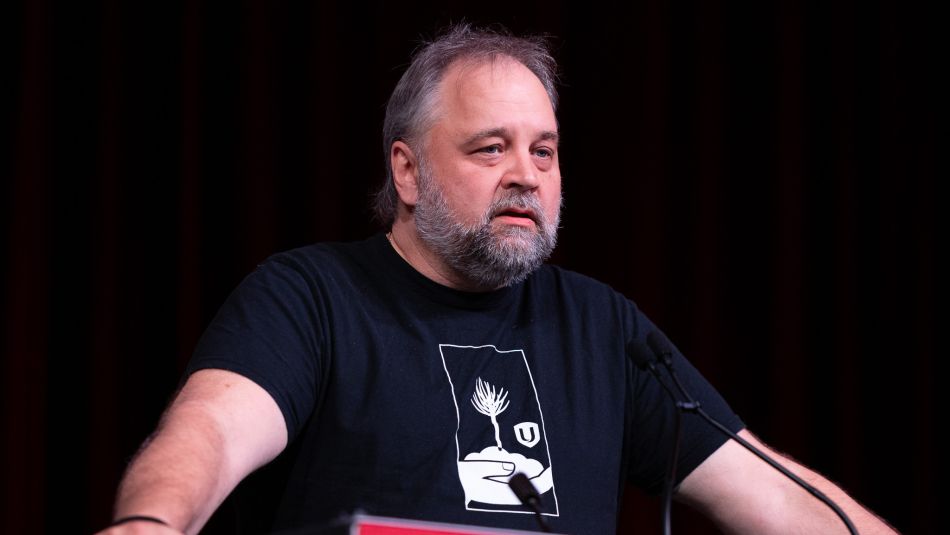
Stéphane Lefebvre, President of the Unifor’s Forestry Council, who himself is facing a workplace closure, presented a National President’s Recommendation: Fighting for the Future of Canada’s Forestry Sector, which calls for a comprehensive strategy to transform and strengthen the sector.
Council adopted the recommendation that day at council.
“We are going to have a National Day of Action in forestry communities all over the country,” said Unifor National President Lana Payne vowed.
“We will make sure everybody [in Parliament] understands this is a crisis. And we keep going until we get what we need to support forestry workers in every community. Because we need this sector today, tomorrow and 20 years from now. So, it’s up to us, together, to fight for it.”
‘STRONG LOCAL UNIONS’
The second day opened with remarks from Unifor National Secretary-Treasurer Len Poirier, who emphasized that workers need a union that is visible and engaged every day, not only during bargaining or crises.
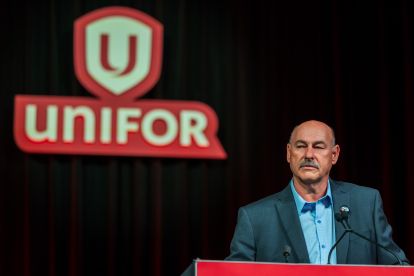
“There is no national union without strong local unions,” said Poirier.
“The majority of our members don’t experience Unifor at Canadian Council. They experience Unifor at their local level.”
Poirier called on locals to represent and communicate with members, welcome new members, and develop the next generation of activists and leaders.
He also announced that nearly $500,000 was raised by locals and the national union for locked out and striking workers during Council.
Council affirmed the National Executive Board’s recommendation of Industry Council Representatives, who took their oath of office.
‘WE TAKE ON THE BIGGEST GIANTS IN THE WORLD AND WIN’
Council heard from three regional directors.
Unifor Western Regional Director Gavin McGarrigle called for stronger worker power and government action to protect good union jobs and Canadian industries in his address.
He sounded the alarm over forestry in B.C., including Canfor’s Northwood closure and Domtar’s indefinite idling at Howe Sound, affecting nearly 700 Unifor members.
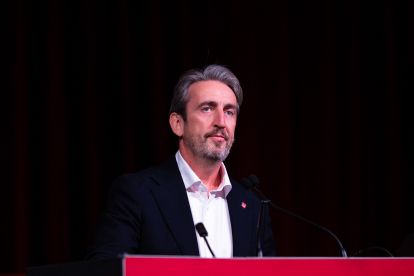
“We don’t want thoughts and prayers and boutique training programs, we want goddamn jobs,” he said fiercely.
“We have to fight for the forestry industry because if we don’t do it, no one will and there will be nothing left to fight for.”
McGarrigle also criticized Alberta Premier Danielle Smith and the United Conservative Party, saying Unifor is working with other labour unions through the Labour Votes coalition and plans a member-to-member campaign around Alberta’s October referendum.
Amazon emerged as a major organizing success story. McGarrigle highlighted the fight to unionize the company’s Delta, B.C. warehouse, more than $1 million in back pay for workers and the move toward a first collective agreement through binding arbitration.
“The goal was never just one warehouse, it was to change an industry and to change people’s lives while growing worker power,” he said.
“We take on the biggest giants in the world and win.”
‘WE DO NOT BACK DOWN AND WE DO NOT DO IT ALONE’
Unifor Ontario Regional Director Samia Hashi said Unifor’s answer to crisis is collective action.
She acknowledged and empathized with the uncertainty facing workers amid the escalating U.S. trade war and threats to jobs in auto, forestry, steel and aluminum.
“We also all watched workers in Ontario and the country come together and turn that fear and uncertainty into the loudest, most organized Protect Canadian Jobs fightback this country has ever seen,” she said.
"We are Unifor. We do not back down, and we do not do it alone."
Hashi also addressed Ontario’s health care crisis, describing hospitals as understaffed and workers burned out.
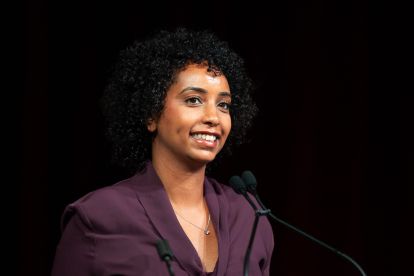
“We brought our Care Can’t Wait campaign directly to Queen’s Park, demanding real staffing standards, real investment, and an end to the creeping privatization of a public good that belongs to all of us,” she said.
“We asked to meet with Conservative MPPs. Do you know how many took that meeting? Two. So, we took it further. We took our fight out of the meeting rooms and into the streets.”
Hashi called intimate partner violence an epidemic and urged the Ford government to officially recognize it as such to unlock resources, funding and accountability.
She also pointed to the nearly year-long Titan Tool and Die lockout as evidence of the need for anti-scab legislation in Ontario.
“This July, after eleven months, almost a year on the line, our Titan members finally got that company to the table and walked away with the severance and the respect they were always owed,” she said.
“Titan Tool and Die is proof of what happens when a company thinks it can simply route around its own workforce and wait out its workers.”
Hashi celebrated the growth of 2SLGBTQIA+ and Black, Indigenous and workers of colour activism, including the creation of the first Ottawa-area BIWOC Committee.
“I stood in that room at our BIWOC conference this year and watched it grow larger than it has ever been. That is not by accident,” she said.
“That is the result of members deciding, year after year, that they were not going to wait for a seat at the table. They’re going to build their own table and pull up more chairs.”
‘NO IS A COMPLETE SENTENCE’
Unifor Atlantic Regional Director Jennifer Murray reassured forestry members they are not alone. She told delegates the real measure of the union’s work isn’t found in statistics, but in the lives of workers and communities it fights for.
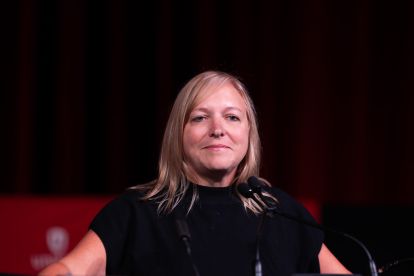
“The real story of our union is found in people. It’s found in workers wondering whether they’ll have a job next month. It’s found in families trying to navigate uncertainty. It’s found in members facing challenges they never expected. It’s found in communities fighting to preserve their future,” Murray said.
“And it’s found in the solidarity that emerges when working people decide that nobody should face those struggles alone.”
Murray highlighted 21 young women at Munro Academy in Cape Breton who went on strike while bargaining their first collective agreement and secured the 40-hour workweeks they had fought for.
She also spoke about Agropur Dairy, where an expansion protects 140 union jobs in Nova Scotia, while recounting the unexpected closure of the company’s Sussex operation and loss of 40 jobs.
After a 10-year battle, Bill 148, a piece of anti-worker legislation, was declared unconstitutional by the Nova Scotia Supreme Court. Bill 148 violated the Canadian Charter of Rights and Freedoms, causing workers to lose out on wages and benefits that should rightfully be theirs.
“This win, that started with Lana at the forefront, didn’t happen by accident. It happened because workers stood together, spoke up, and refused to accept that their rights and dignity could be ignored,” she said.
“It happened because Unifor members, activists and allies fought for justice. This is proof that we never have to accept status quo.”
Murray closed her speech by reflecting on the union’s legacy.
“I hope they tell the story of a union that showed up. A union that listened. A union that fought. A union that refused to leave anyone behind,” she said.
“And when people needed someone to fight alongside them, Unifor was there.”
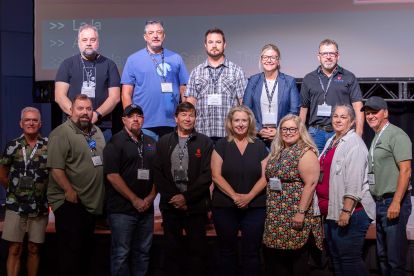
MORE CONVERSATIONS ABOUT NATIONAL BARGAINING PROGRAM
Delegates continued providing feedback on Unifor’s National Bargaining Program for 2026 to 2029.
Developed with input from members across the country, the program establishes cross-sector priorities for bargaining committees and staff to bring to negotiations over the next three years.