

Share
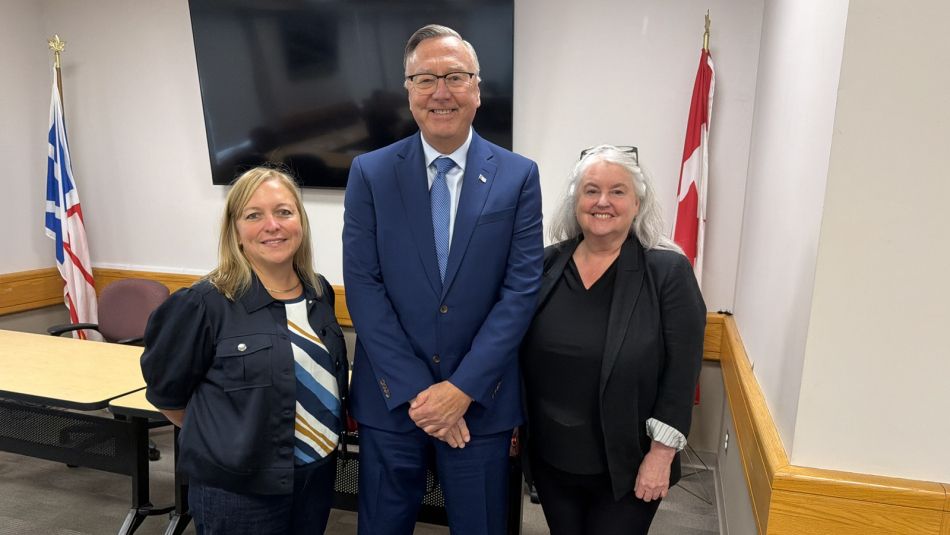
Unifor and FFAW-Unifor brought workers’ priorities to the table as Newfoundland and Labrador Premier Tony Wakeham convened a roundtable on the escalating Canada-U.S. trade tensions.
The September 9 meeting was the first tariff roundtable hosted by Wakeham since his election last October. The roundtable was established to bring together unions, business leaders and other key stakeholders to identify ways to protect workers and navigate the growing threat of tariffs and trade disruption.
For Unifor and FFAW-Unifor, the message was clear: workers must be at the centre of any response to the trade war, and governments must use every tool available to protect good jobs and strengthen Newfoundland and Labrador’s economy.
“This was a productive conversation where we shared ideas on how to protect and grow jobs across Newfoundland and Labrador,” said Unifor Atlantic Regional Director Jennifer Murray. “That means investing in nation-building projects, strengthening local industries and making sure workers are at the heart of the province’s economic strategy. In the face of growing trade uncertainty, we need to be building here, manufacturing here and creating good jobs for people who call this province home.”
While the 25% duties China previously imposed on Canadian lobster, crab, and other aquatic products have been suspended until the end of 2026, tariffs on Canadian sea cucumber products remain in effect, and workers continue to face uncertainty about the future of these markets.
FFAW-Unifor President Dwan Street stressed the need to protect workers whose livelihoods depend on a strong fishing and processing sector, while ensuring workers have the supports they need when jobs are at risk.
Workers should not be left to shoulder the burden when trade disputes and decisions beyond their control put their jobs and incomes at risk,” said Street. “We need strong income protection and an Employment Insurance system that workers can count on to weather periods of reduced work or job loss.”
The roundtable also highlighted the importance of keeping Skilled Trades workers in Newfoundland and Labrador. Wakeham outlined the province’s efforts to promote opportunities in the Skilled Trades and encourage workers to build their careers at home.
For Unifor and FFAW-Unifor, keeping workers in the province means creating good, stable jobs and making the investments needed to give workers a reason to stay.
As trade tensions continue to put pressure on workers and industries, Unifor will continue pushing for an economic strategy that protects jobs, strengthens local production and puts workers first.