
Share
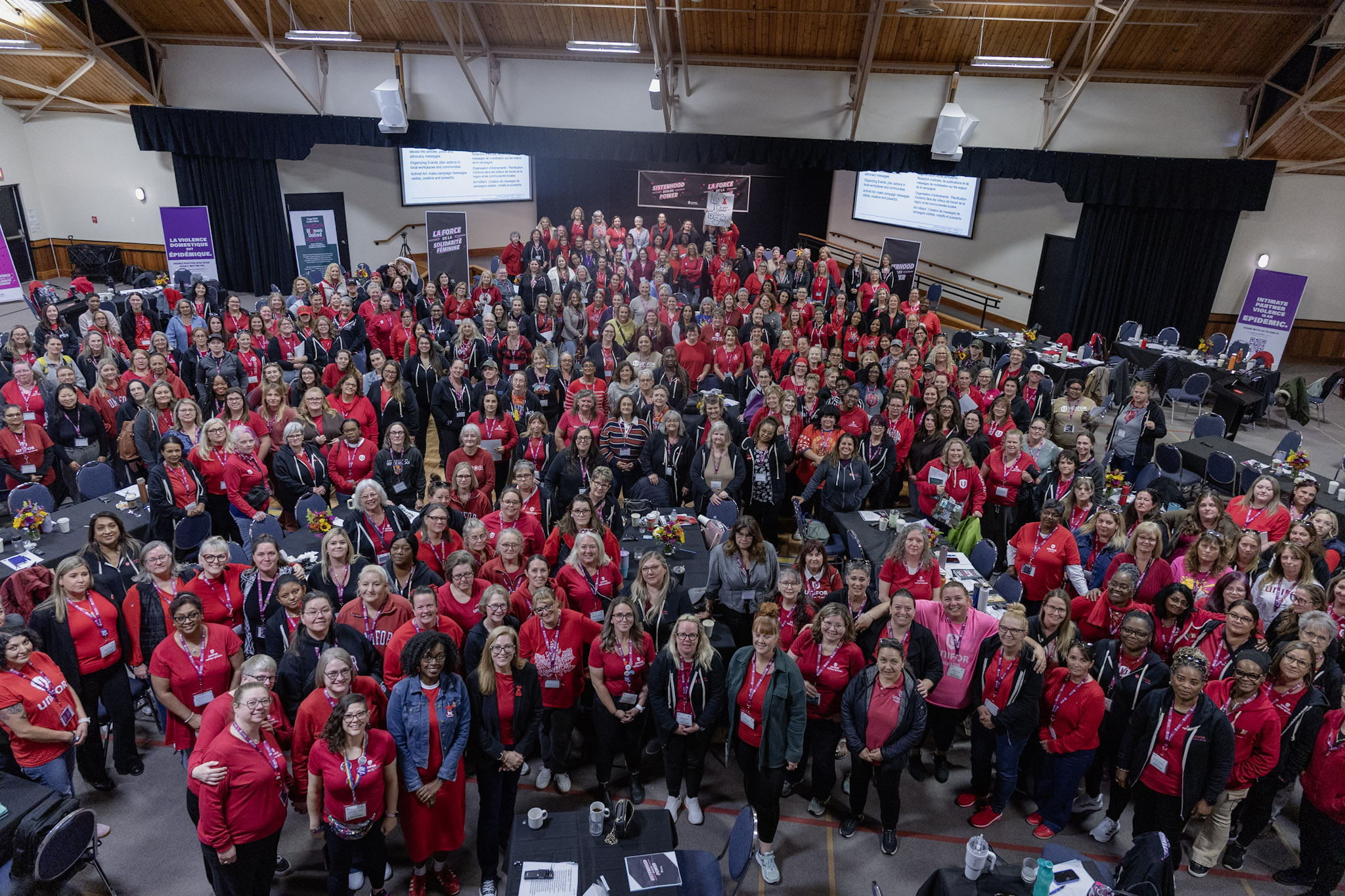
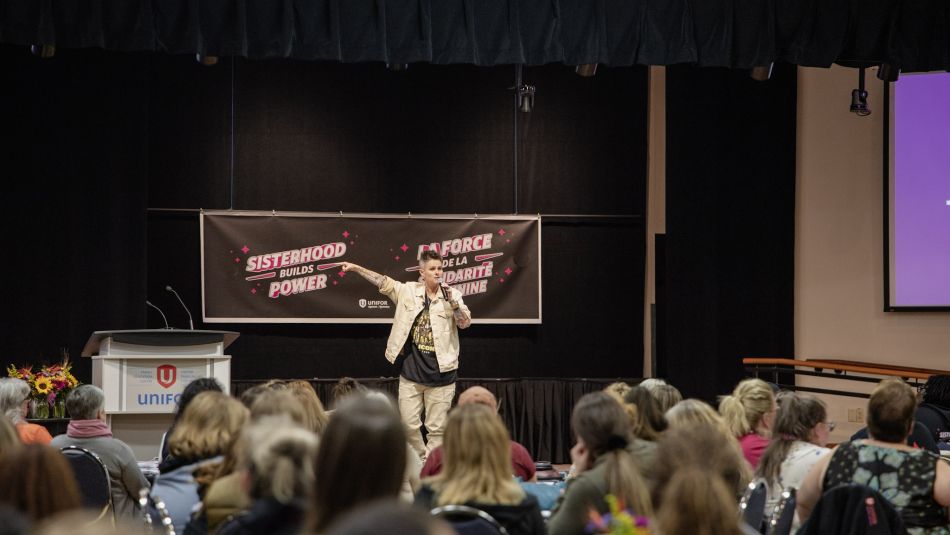
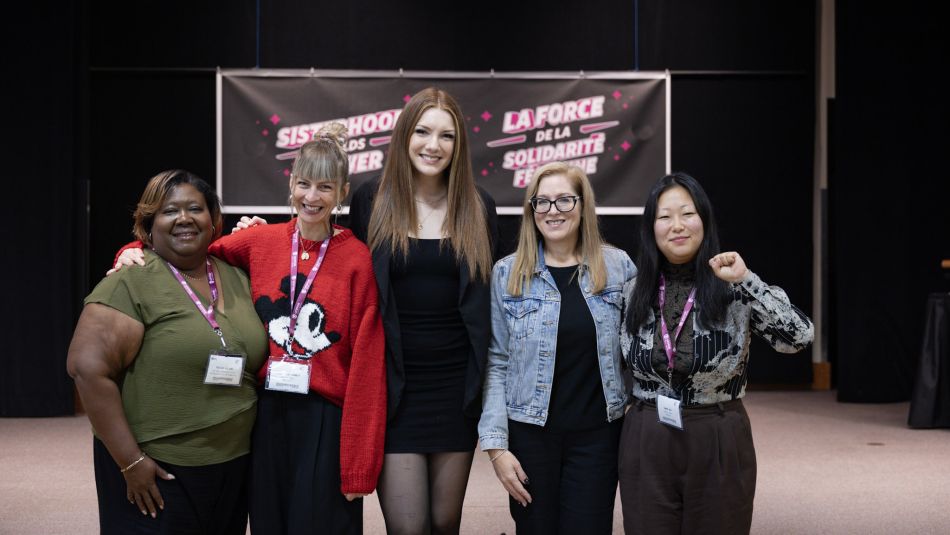
Speaking to a room of nearly 400 at Unifor’s National Women’s Conference in Port Elgin, Ont., teacher and TikToker Joanna Johnson opened the event with a keynote address that tapped into the strength of women and the truth they must wield, framing the conversations that would follow over the coming days.
“We’re afraid of telling the truth because we’re afraid it will limit our progress and our access.”
Johnson asked delegates to embrace their individuality and their strength, and to move past these fears, “I wouldn’t dare undo how deep we think, and how deep we feel. Emotion is our superpower.”
What followed was three days of truth-telling and organizing for a reimagined future, with justice and equity for all.
Resist: Unifor leadership drives home the power of the union
In a sincere and raw address to delegates, Unifor National President Lana Payne covered ground from rape culture to defending the right to strike, and how each of these big issues weighs on members as union leaders, advocates and women.
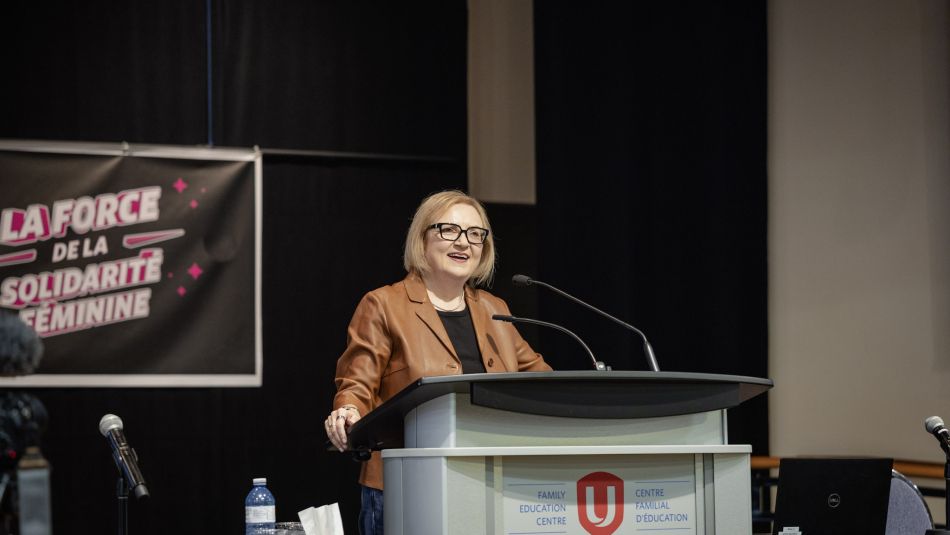
“I see your activism, leadership and the difference you make in your locals and your communities. I see the unstoppable force that you are. I see your anger at the injustice.”
“We want a world where women do not have to be protected, where there are no more Jane Does. Everyone failed Jane Doe but women, including the women student journalists who told her story. Never doubt the importance of investigative journalism in this world.”
Payne gave special thanks to the sisters and siblings who support survivors of domestic violence. She called on all governments to declare intimate partner violence an epidemic in this country and urged delegates to join that fight.
“Our members deserve a union that never backs down, never settles for less, and never forgets who they’re fighting for.”
Workers, including Unifor members in Canada’s industrial economy, are bearing the brunt of a trade war. In the midst of it, the federal government has made a legislative move to further strip workers of power and rights.
Bill C-39 moves to degrade the Canada Labour Code, which then puts provincial labour codes at risk. The proposed amendments are designed to weaken free and fair collective bargaining.
Payne shared what she has told the government since day one of this rushed consultation: “We either have rules that are fair and respect our constitutional rights or we have chaos.”
Members can join the fight to protect the right to strike and free collective bargaining by signing up to the union’s campaign.
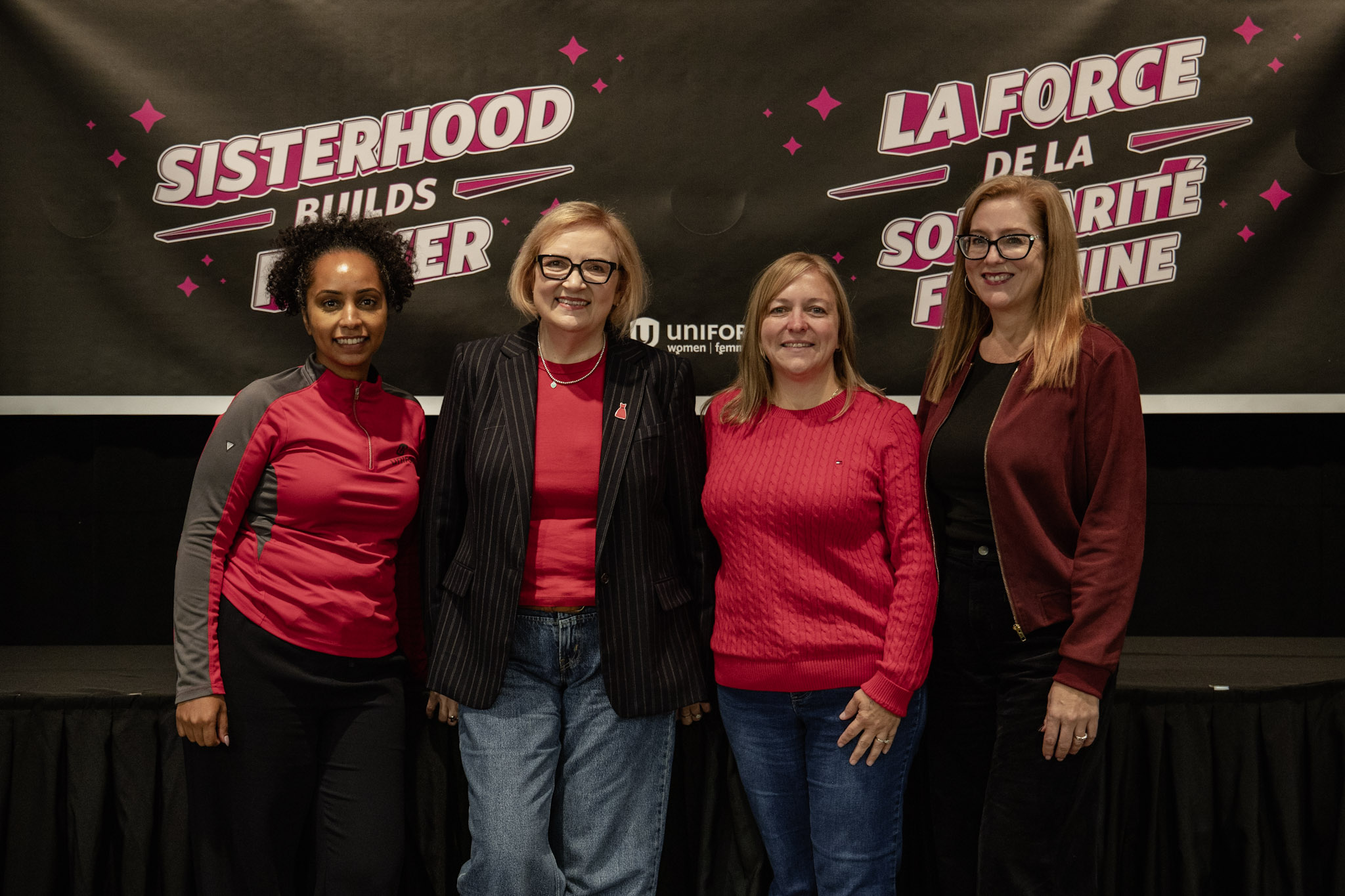
Unifor Atlantic Regional Director Jennifer Murray and Ontario Regional Director Samia Hashi also joined the conference. Both leaders opened the door to current issues facing women in their regions and then invited delegates to join the charge.
Hashi, who organized her own workplace to join Unifor, said, “We’re organizing because every woman entering the workforce deserves to know that there is a strong Canadian union ready to stand beside her.”
One of the most powerful ways union sisters and siblings have shown that solidarity is through groundbreaking collective bargaining wins like the Women’s Advocate program.
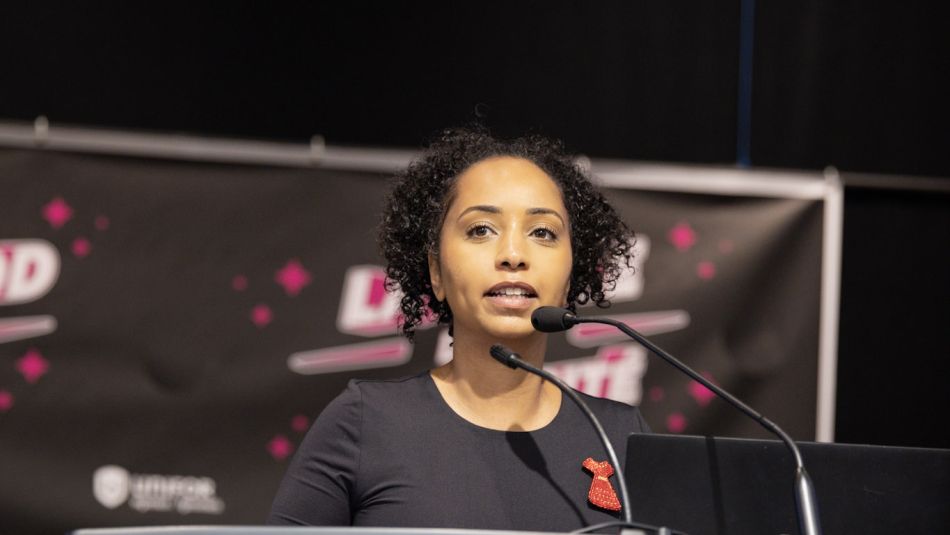
“When we fight for Women’s Advocates, we’re making sure there is someone in the workplace who understands, who will listen and who knows how to help,” continued Hashi.
She thanked the lifelong union activists who push doors open for women and make change happen, “They fought because they wanted something better for the women coming behind them.”
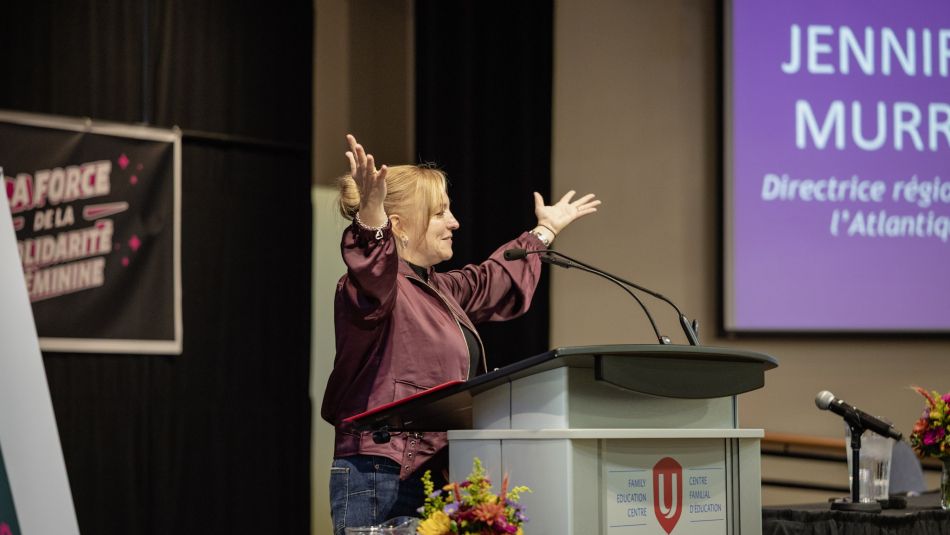
Murray, whose background is in the rail sector, knows what it’s like to be the only woman in the room. “Women didn’t wait for the labour movement to become feminist. They made the labour movement more feminist,” she said.
She spoke about workplaces where Unifor sisters and siblings are pushing for more space and more power, including the recent creation of a women’s committee at Local 2121 on Newfoundland and Labrador’s offshore oil rigs.
“There is no doubt that this work needs fearless women. It isn’t easy being brave, but sisters that is how we all find our strength.” Murray said, commenting on these acts of solidarity, and on the Atlantic spirit of community care that underpins the work of the Unifor sisters and siblings across the region.
Julie White and Peggy Nash recently published Women United, a book of firsthand stories from women leaders of the Canadian Auto Workers (CAW), one of Unifor’s founding unions, gathered through interviews.
White and Nash shone a light on the fight at Fleck Manufacturing, where women workers’ advocacy and 163-day strike won the Rand Formula, the automatic check-off of union dues.
Rise: Building a feminist opposition
These stories of past activism flowed into a panel on the Rise of the Anti-Feminist Right, featuring Action Canada for Sexual Health and Rights Executive Director Frederique Chabot, journalist Rachel Gilmore and Migrant Workers Alliance for Change (MWAC) Coordinator Sarom Rho.
The women spoke about organizing with hope in areas where the antifeminist right has latched on and is gaining ground.
Gilmore began covering the far right during the pandemic. “They really exploded during that time when we were all inside,” she said.
She reflected on how these groups draw people in by offering clear, easy answers to their fears.
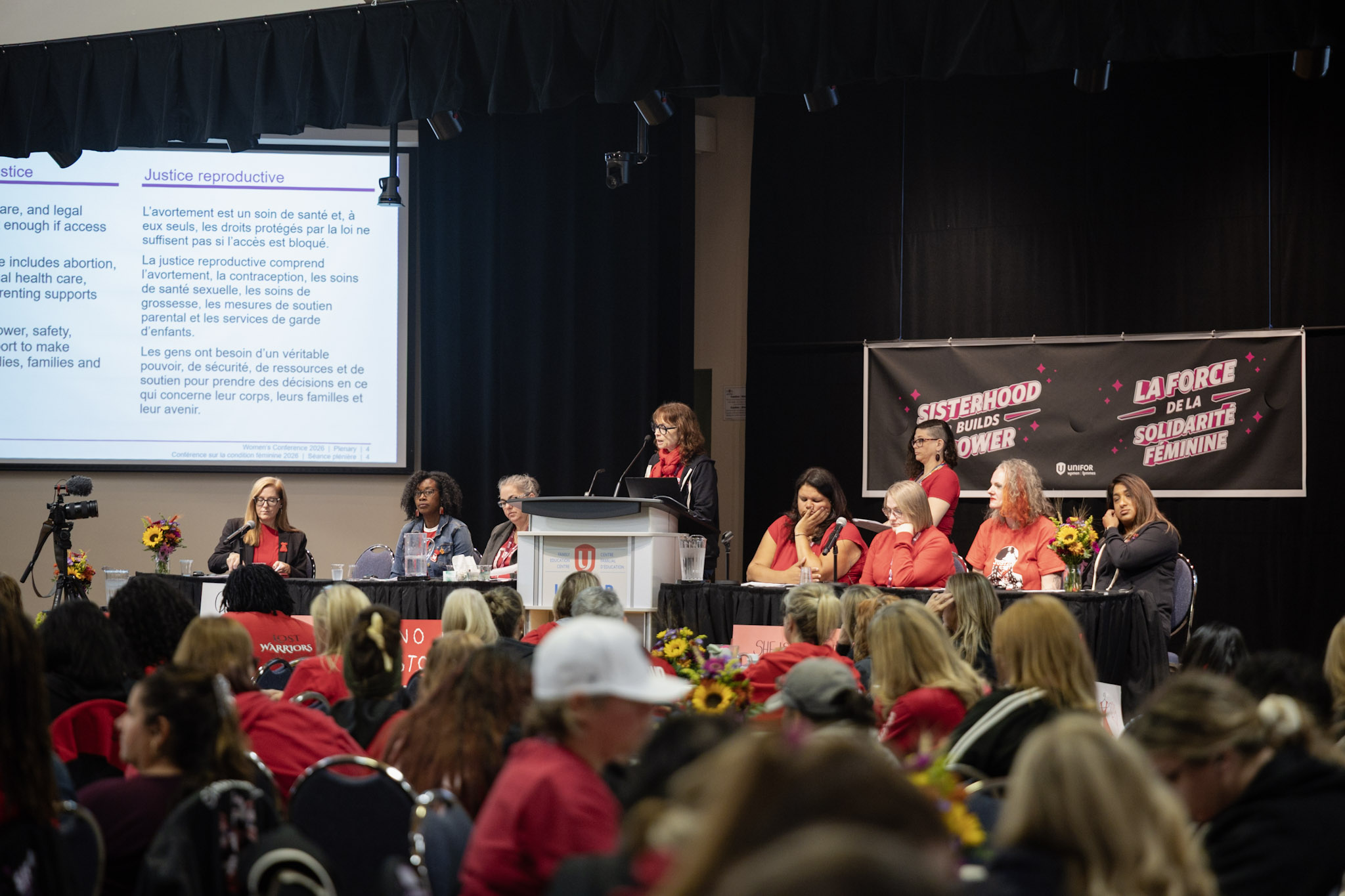
On abortion and reproductive rights, Chabot said, “When people say abortion is health care, there is only one place where that is true, and that is Canada. We are the gold standard.”
She also reminded delegates that “there’s no abortion care if there is no health care system, if there are no nurses.”
That is why Action Canada pushes for public health care and improved labour standards, the conditions that make reproductive justice possible in our country.
Rho’s work has brought her together with migrant workers in warehouses, farms, restaurants, schools, offices and more.
She asked delegates to rethink the cause of worsening working conditions.
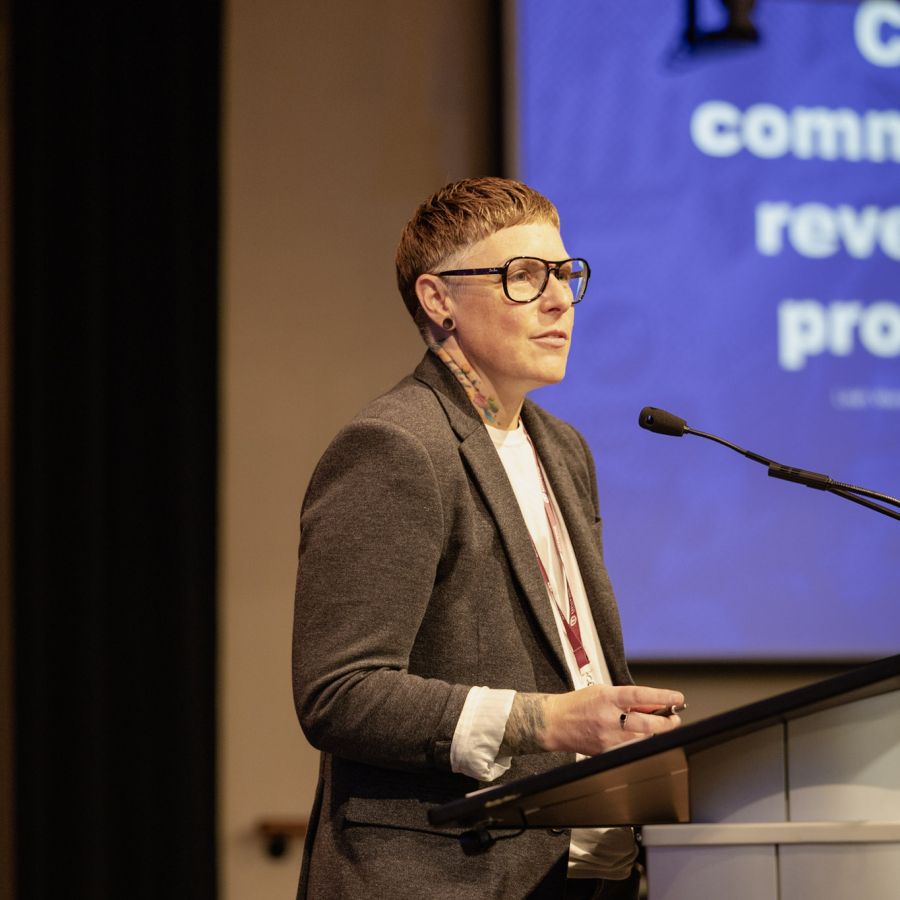
“Is it migrants who lower our wages? Is it migrants who have called on the federal government to take money away from public housing? These are decisions made by employers and government that harm all workers.”
Canadian Labour Congress Director for Political Action and Campaigns Leah Ward reflected on her career in both communications and political action.
“In politics, when something doesn’t land the way you want, you hear, ‘Get the comms people, we have a comms problem.’ But how we think about the world is shaped not by what we hear, but what we experience.”
Ward shared the example of Bill 6 in Alberta, which aimed to give farm workers access to some of the most basic workplace protections other workers already enjoyed.
“We thought we were having a conversation about workplace safety, but rural Albertans were having a different conversation, one about the challenges facing family farms. The question in their mind was, is there a place for my way of life in this new world?”
Reimagine: Honouring MMIWG2S and stepping into tomorrow’s activism
The conference opened on Oct. 4, which marks National Day of Action for MMIWG2S he National Day of Action for Missing and Murdered Indigenous Women, Girls and Two-Spirit people (MMIWG2S) whose lives have been taken or disrupted by violence.
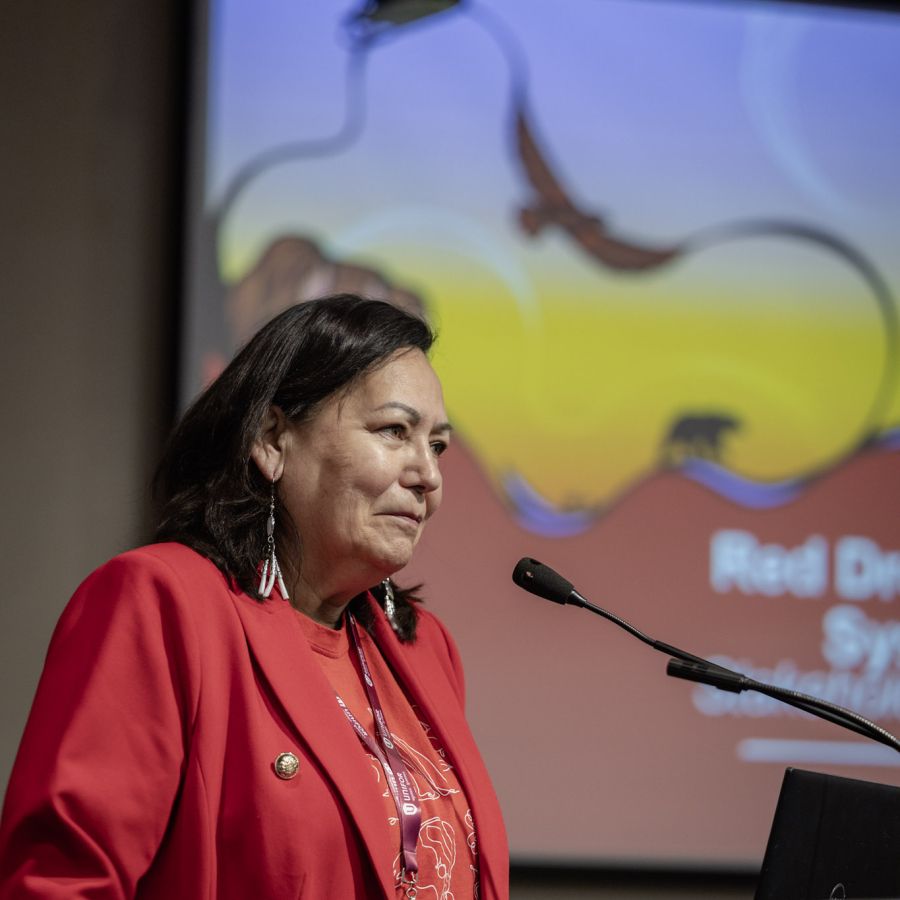
Sandra DeLaronde, Chair of Giganawenimaanaanig (formerly the Missing and Murdered Indigenous Women and Girls Coalition of Manitoba), spoke to the historical and continuing fact of genocide in Canada.
“What happened was women and their families were displaced, generation after generation after generation. Our practices were criminalized. For many years, the spiritual aspect of our living was not practiced.
“Today, reclaiming the language is an act of resistance. Reclaiming our place in the ceremony is an act of resistance.”
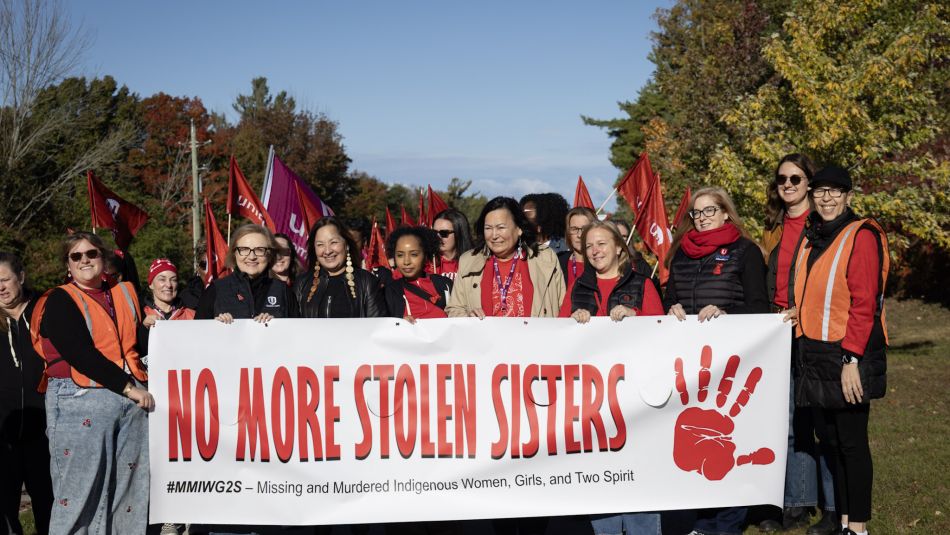
Delegates marched in support of MMIWG2S, reflecting on the lives taken and committing to action to stop the violence.
The Red Dress Alert Project is a dedicated alert system for missing Indigenous women, girls and Two-Spirit people that has the potential to save lives across the country.
Giganawenimaanaanig leads the development and implementation of a pilot Red Dress Alert System in Manitoba, but provincial and federal governments have not fully funded this system or committed to its adoption.
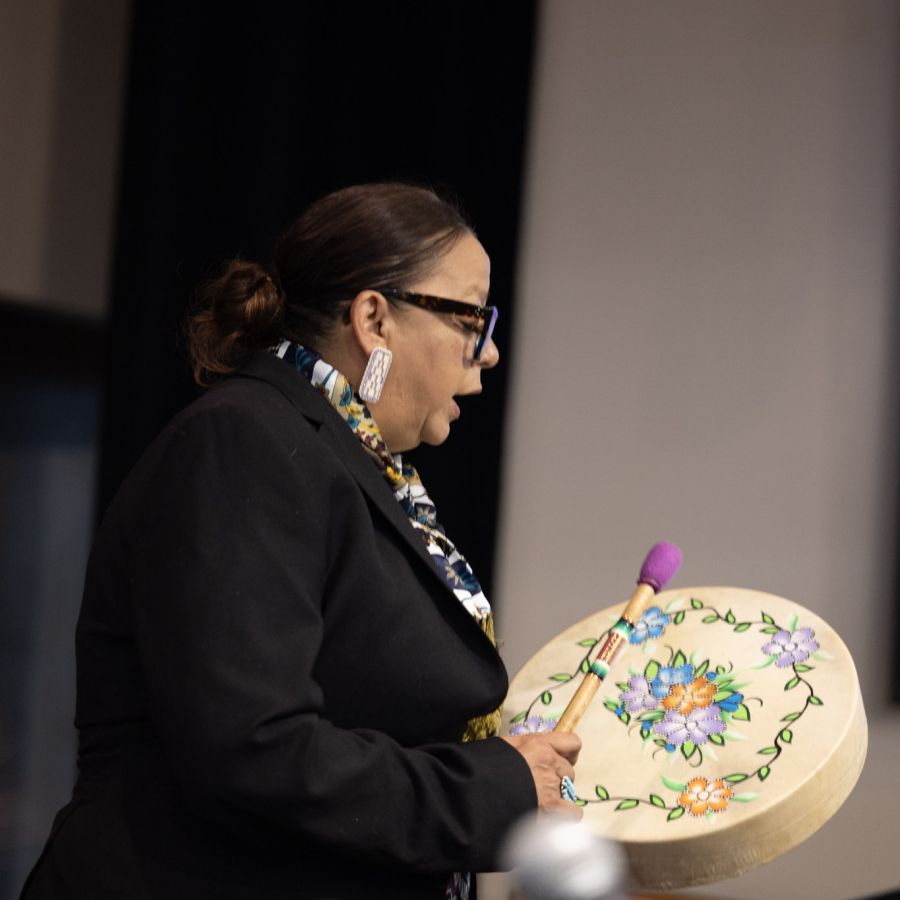
Katherine Proulx White, Bii Waubun Kwe (Bee-Waa-Bun Quay), an Anishinaabe Knowledge Carrier, language learner, cultural educator and community advocate, joined delegates on their march for justice. She then spoke to the conference, answering questions about the history and importance of the red dress as a symbol.
“People will hang red dresses, a colour appointed by elders to recognize the missing and murdered women. Red is tied into our medicine wheel. It’s about the connection of all nations across Turtle Island.”
Unifor Women’s Director Tracey Ramsey spoke about this vision to end violence against Indigenous women, girls and Two-Spirit people: “One of the moments I will carry with me from this week was walking back through the line of you all in beautiful red during our MMIWG2S march. Seeing all of you chanting, holding signs and holding space for the end to violence against Indigenous women.”
“And I thought, this is what solidarity is supposed to look like.”
Unifor women run national and local campaigns to fight for a future without intimate partner violence, and for equal pay, reproductive justice and a fully funded national child care program.
During the conference, a panel of members shared updates on these campaigns and invited delegates to step into action.
On Wednesday morning, as the conference closed, delegates met in regional meetings to plan their continued activism and bring these campaigns home.
“When we arrived here on Sunday, some of us came with women from our locals and some came not knowing many people or anyone at all. But look around this room now. There have been friendships made here,” Ramsey told delegates.
“We have inherited victories from so many women who refused to be quiet. Now we have a responsibility to protect those victories and keep pushing forward.”