

Share
For seven years now, Black Friday has meant more than discounts. On Make Amazon Pay Day, while Amazon counts its biggest sales of the year, its workers and their allies count something else: what it costs them to keep the machine running. This year, for the first time, they have a breakthrough in North America to show for it.
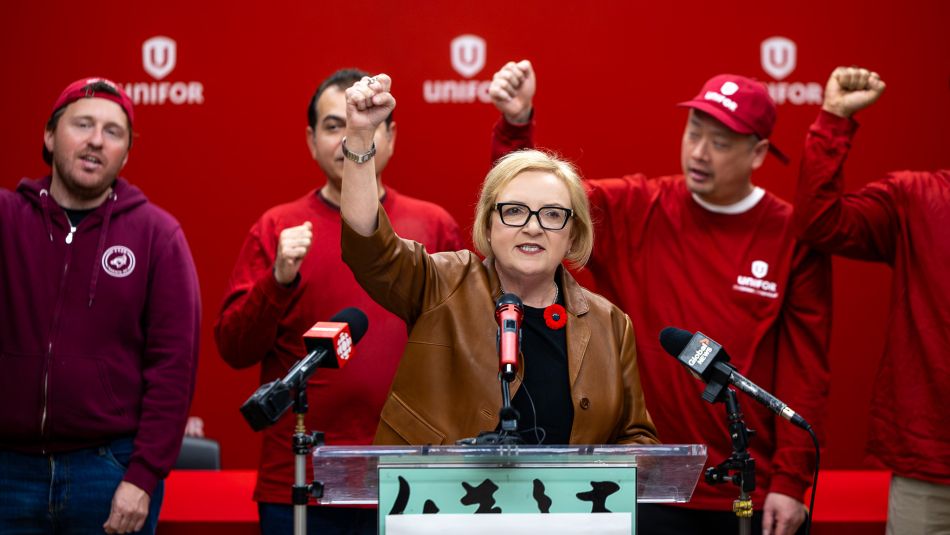
This month, about 800 workers at Amazon’s YVR2 fulfilment centre in Delta, British Columbia, became the first Amazon workers in North America covered by a binding collective agreement. Wages rise to 29 Canadian dollars an hour. Severance reaches up to 18 weeks. Long-serving workers get more vacation, and there is now a Women’s Advocate on site. These are rights in writing, not promises from management.
The victory followed a British Columbia Labour Relations Board finding that Amazon had engaged in a lengthy and pervasive anti-union campaign. The board subsequently ordered binding arbitration after concluding that the company’s conduct had affected the parties’ ability to reach an agreement. Amazon could have bargained in good faith. It chose a campaign against its own workers instead.
For years, Amazon told workers across North America that a union contract was impossible. The workers in Delta and their union, Unifor, did not believe it. They were right.
Ten years ago, UNI Global Union launched the Amazon Global Union Alliance with unions from around the world. Our reasoning was simple. Amazon operates in dozens of countries, moves capital across borders at will and depends on a global workforce. You cannot take on a company like that one warehouse at a time. Workers have to organize the way Amazon does business: across borders.
That strategy is working. Earlier this year in Italy, Filt CGIL, Fit CISL and Uiltrasporti signed a national agreement with Amazon covering 57 sites, building on a labour protocol agreed in 2021. It expands workers’ rights and limits video surveillance, and it is the first national agreement of its kind with Amazon anywhere in the world. Italy shows that Amazon can bargain with unions when it wants to. There is no reason it cannot do so everywhere.
In Germany, ver.di won 12 of the 19 seats on the works council at Amazon’s FRA7 facility in Frankenthal in May 2026. Workers there now hold the majority on the body with legal rights to shape conditions on site.
In the United States, since the workers in Bessemer, Alabama, in 2021 and on Staten Island in 2022 challenged the debate about whether Amazon could be organized at all a lot has changed. The Staten Island workers won their election, and Amazon has spent the years since refusing to accept the result. Now the Staten Island workers affiliated with the Teamsters, strengthened the resources available to workers continuing the fight for collective bargaining. And the National Labor Relations Board has ordered the company to recognize and bargain with their union. Elsewhere in the country, Amazon workers keep walking out. This is the kind of progress you see when workers stay motived to fight, and unions dedicate time and resources to find every legal nook and cranny to try to win.
In India, the Amazon India Workers Association demanded protection for warehouse workers during the brutal heatwaves of 2024. When workers went public about their conditions, the National Human Rights Commission stepped in and Amazon was forced to admit to safety lapses.
Different laws, different workplaces, different politics. The same demand: a real voice at work, through a union, at the bargaining table.
This is not only about labour relations. It is about whether any company, however large, answers to democratic institutions. In 2024, the European Parliament withdrew Amazon lobbyists’ access badges after the company refused to take part in parliamentary scrutiny of warehouse conditions. Members of the European Parliament have kept up the pressure ever since, and last month they went inside Amazon facilities to see conditions for themselves.
Amazon is not just another employer. Its reach into logistics, technology, employment and public infrastructure gives it enormous influence over how our economies work. So governments have to ask a basic question: should companies that receive public money be free to disregard workers’ rights, undermine collective bargaining and use aggressive tax practices that drain resources from public services?
We already know the answer. This week, more than 30 trade union leaders representing millions of workers signed a public letter urging governments to take a stronger stand on public procurement and Amazon’s conduct. Public contracts are one of the most powerful tools governments have. Public money should reward companies that respect workers and pay their fair share. It should never underwrite union-busting.
We will not pretend the fight is won. Amazon remains a formidable opponent. Workers who organize still face aggressive resistance. In many countries, collective bargaining remains out of reach, and even where workers win recognition, turning it into an agreement can take years.
That is why this Make Amazon Pay Day is about keeping up the pressure, not just marking progress. On Black Friday, Amazon workers in dozens of countries will strike and protests, backed by unions and civil society. Our demands are clear. Respect workers’ rights. Negotiate with their unions. Pay a fair share of tax. Take responsibility for the social and environmental costs of the business.
Economic success cannot be built on the erosion of workers’ rights. Innovation does not excuse intimidation. And no company’s market power places it above democratic accountability.
Seven years ago, a binding collective agreement for Amazon workers in North America seemed almost unimaginable. Today, workers in British Columbia have one. Amazon has spent years telling its workers they are too small, too isolated and too replaceable to take it on. The question is no longer whether Amazon workers can win. It is where they win next.
Christy Hoffman is General Secretary of UNI Global Union, which represents more than 20 million workers in the services sectors in 150 countries. Lana Payne is National President of Unifor, Canada's largest private-sector union.