Unifor represents a bargaining unit of approximately 599 ship-based unlicensed personnel, including deckhands, bosuns, stewards, passenger service personnel, cooks and engine room assistants.
Unifor also represents a separate bargaining unit of 52 shore-based maintenance employees.
MAI’s operations
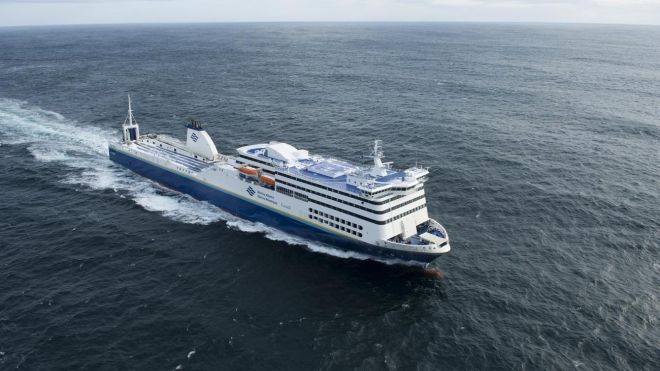
Marine Atlantic’s ferry services cover year-round sailings between North Sydney and Port Aux Basques, varying from one to three daily crossings each way, depending on the season. During the summer months, there is also a ferry services from North Sydney to Argentia, with three crossings per week, each way. Marine Atlantic operates four vessels, three carrying commercial and non-commercial vehicles and one which carries drop trailers only.
MAI’s refusal to bargain in good faith
Unifor’s efforts to bargain with Marine Atlantic since 2004 have been met with delays and intransigence. Marine Atlantic has refused to engage with the Union’s attempts to bargain improvements to wages and benefits. Its wholesale rejection of Unifor’s proposals has consistently meant having to resort to binding arbitration.
During the last two rounds of bargaining, Marine Atlantic engaged in delaying tactics and obstructionist conduct. It took four years to finalize an agreement for the period 2020-2022. Even though the Union filed notice to bargain early, in 2019, the parties were unable to reach an agreement until 2023. Conclusion of the subsequent agreement for 2023-2025 was not reached until 18 months into the new agreement.
Left with expired contracts during protracted bargaining meant that workers’ wages were effectively frozen during one of Canada’s worst inflationary periods. Workers experienced zero improvements to benefits during this period, which meant substandard paramedical, dental and psychological coverage during the COVID 19 pandemic. This benefit loss was not made up with lump sum payments after a contract was finalized.
s. 87.4 of the CLC and process of getting an MOAA
As a normal part of the bargaining process in the federal sector, unions and employers must enter into an agreement to maintain essential activities that are necessary to prevent an immediate and serious danger to the safety or health of the public. Unions and employers are required to negotiate a Maintenance of Activities Agreement within 15 days of issuing the notice to bargain. The agreement must describe what workplace activities will continue during a strike or lockout to prevent immediate and serious danger to the health or safety of the public. An agreement is also required even if the parties agree that no activities need to be maintained. The agreement must be provided to the Minister and filed with the CIRB. If the union and employer do not reach an agreement on what activities, if any, must be maintained, the issue can be referred to the CIRB for a decision. The CIRB is required to decide upon applications within 82 days, although this timeline may be extended by the CIRB. In 2021-22, the average processing time for a maintenance of activities agreement dispute to be decided by the Board was 170 days.
Past decisions by Canada Industrial Relations Board
In 2004 the Canadian Marine Officers’ Union (CMOU) applied to the Board under section 87.4 of the Code to decide the question of what activities needed to be maintained in the event of a strike or lockout after failed attempts to reach an agreement with the employer on the issue. At the time, CMOU represented a bargaining unit of approximately 150 licensed personnel on the vessels. CAW-Canada represented 540 unlicensed vessel crew and 85 shore-based maintenance personnel.
The Board ultimately decided that there should be no reduction in the level of ferry services because at that time the ferry service was the sole accessible link available to a majority of the travelling public, the trucking industry and its customers.
In arriving at its decision, the Board considered that in 2004, Marine Atlantic delivered 90% of all fresh, perishable or time-sensitive goods and it carried 60% of all commercial traffic coming in to Newfoundland and Labrador. The Board referred to a strike that occurred in 1973 (31 years prior) and the resulting traffic pileups, stranded locals and travelers and the interruption in distribution of commercial goods. It concluded that members of the public would experience mental distress by a reduction in the ferry service and that their access to medically necessary goods would be compromised resulting in risk to public health.
Subsequently, in 2008, the Board ruled that although its earlier 2004 decision applied to all unions representing employees of Marine Atlantic, this did not mean that CAW-Canada (now Unifor) could not still argue that some of the services provided by its members could be withdrawn without affecting the required level of ferry service.
Unifor’s position now
The Union seeks a determination from the Board that certain services normally provided by our bargaining unit members may be withdrawn partly or entirely in the event of a labour dispute, without reducing the level of ferry services such that it poses an immediate threat to public safety or health.
Our position is that bargaining unit activities may be reduced or withdrawn entirely, while still maintaining a level of service that would meet the parties’ obligations under section 87.4(1). In our view, the Board ought to find that the level of service provided by the Employer, in terms of the number of ferry crossings per day and per week, may be reduced without presenting an immediate danger to public safety or health.
FAQ: Marine Atlantic bargaining and Maintenance of Activities Agreements
Is the union trying to shut down the ferry service?
No. Unifor is not attempting to shut down the service or strip Marine Atlantic of its essential role. Rather, the union is participating in a routine, legally mandated process under Section 87.4 of the Canada Labour Code.
Why has Unifor applied to the Canada Industrial Relations Board (CIRB) regarding a Maintenance of Activities Agreement (MOAA)?
Under federal labour law, when a union or employer files a notice to bargain, both parties are required to negotiate a Maintenance of Activities Agreement (MOAA) within 15 days. This agreement defines which specific operations must continue during a dispute to prevent an “immediate and serious danger to the safety or health of the public.”
This is a standard procedure in federal sector bargaining. Marine Atlantic has refused to negotiate this agreement insisting on a year-round full worker complement level that effectively eliminates the Union’s right to bargain effectively for these workers.
Unifor has referred the matter to the CIRB to decide the question of what level of service must be maintained, and to establish a fair playing field for bargaining.
What are the specific terms of Unifor’s proposed Maintenance of Activities Agreement (MOAA)?
Unifor’s proposal ensures that the essential needs of Newfoundlanders are fully protected, while still allowing workers to exercise their constitutional right to bargain with leverage. Safeguarding access to food, medicine, and critical transport is included in our submission.
Our proposed essential services plan includes:
- North Sydney to Port aux Basques Route to be maintained at an essential service level of one crossing in each direction three times per week.
- Vessel crewing levels to be reduced to essential workers.
- Shore support will be maintained to operate the ramps and fuel the vessels once every two weeks.
- The seasonal route from North Sydney to Argentia will be suspended during a dispute.
Why does Unifor propose to suspend the North Sydney to Argentia route during a dispute?
The Argentia route is a summer-only, tourist-focused service. Marine Atlantic itself takes this vessel out of service for nine months of the year. By definition, a service cannot be legally classified as “essential to prevent immediate danger to public health and safety” if the employer voluntarily shuts it down for 75% of the year.
While the route is convenient for tourists and local businesses during these summer months, the Canada Labour Code distinguishes between public safety (life and health) and economic considerations.
Forcing workers to provide labour solely to protect tourist revenues undermines the basic rights of employees to bargain effectively with Marine Atlantic and is inconsistent with section 87.4 of the Code and the CanadianCharter of Rights and Freedoms
If Marine Atlantic is a Constitutional “lifeline” for Newfoundland, why should workers have the right to strike?
The federal government’s Constitutional obligation is to fund the Marine Atlantic service, not to force workers to accept depressed wages and worsening working conditions.
If the work performed by Marine Atlantic employees is essential to the well-being of the province and the national supply chain, it is imperative that they are compensated accordingly, with fair, competitive wages.
Local business groups and government officials should not argue that a service is critical to the public interest while simultaneously demanding that the workers who ensure its safe operation are denied the basic bargaining leverage available to all other Canadian workers.
As our members have learned with Marine Atlantic, without the right to strike, collective bargaining is reduced to mere consultation. There is no incentive for the employer to make serious efforts to negotiate to reach a fair collective agreement.
How have bargaining delays and expired contracts affected Marine Atlantic workers?
Marine Atlantic has established a pattern of protracted bargaining delays, leaving workers without a contract for years. This strategy pressures the union to accept binding arbitration, which rarely awards new benefits or addresses outstanding language.
The result is clear:
- Bargaining delays
- The 2020–2022 contract took four years to finalize (settled in Fall 2023). The subsequent contract took 18 months (settled in July 2024).
- Wage erosion
- These long delays froze workers’ wages during the peak of Canada’s recent inflation crisis.
- Lost benefit
- While wage increases are paid retroactively once a contract is signed, workers are left stuck at lower wage rates during the limbo period. Additionally, improvements to health, dental, and paramedical benefits are not retroactive. Workers permanently lost benefit coverage improvements during the COVID-19 pandemic and high-inflation years.
How does the federal government’s policy of cutting passenger fares impact negotiations?
In July 2025, the federal government announced a 50% cut to passenger fares on federally supported ferry routes and a freeze on commercial freight rates. While this policy was introduced to lower transportation costs for the public and commercial transport, it has placed financial pressure on Marine Atlantic’s operating revenues.
Rather than funding this decision through increased federal supports, the employer and government are attempting to balance its books by suppressing the wages of its workers.
The federal government should not fund commercial discounts by compressing the wages and benefits of the workers who keep the ferries running. Part of the essential nature of this ferry services should be that Canadian government fund the ferries appropriately to ensure decent wages and conditions for workers who operate it.
Why is binding arbitration not an acceptable solution to this dispute?
Binding arbitration is often framed by government and business groups as a neutral and painless way to resolve labour disputes. In practice, however, it is structurally biased in favour of the employer and undermines the Constitutionally protected right to bargain and strike. The same Constitution that provides for Marine Atlantic funding.
Both rights are important to Canadian workers, families, and communities.
Arbitrators are historically quite conservative in their decisions, applying existing industry patterns rather than awarding new benefits or addressing complex workplace issues.
Pushing disputes to compulsory arbitration removes any incentive for Marine Atlantic to negotiate in good faith.
Under compulsory arbitration, the employer knows it can stall indefinitely and let a third party impose the status quo. A fair contract can only be reached when workers have their Constitutional-guaranteed right to bargain effectively, including some level of right to strike.
Bargaining Updates
August 17, 2026
Dear Members,
Following the release of Arbitrator William Kaplan’s awards, your bargaining committees want to provide an update on what we achieved for members.
This was a difficult round of bargaining. Your collective agreements expired at the end of 2025, and negotiations, conciliation and the Maintenance of Activities Agreement (MOAA) process continued into 2026.
The Union filed MOAA applications with the Canada Industrial Relations Board as part of our effort to challenge the restrictions that have prevented Marine Atlantic workers from having a meaningful right to strike.
On June 29, the parties met with William Kaplan. After careful consideration by the bargaining committees, Unifor legal counsel, outside counsel and Union leadership, we made a strategic decision to move forward with Kaplan as a special mediator and, if necessary, arbitrator.
We withdrew the MOAA applications while preserving our ability to pursue the issue again in the future. The decision allowed us to focus the pressure that had been created through the MOAA process on securing the strongest possible collective agreement for our members.
On June 29, the parties reached agreement on general wage increases and benefits for both Agreements B and C. The remaining outstanding issues proceeded to mediation/arbitration in Halifax on July 28 and 29. Both sides submitted detailed written briefs and reply briefs, and the union had the opportunity to make its arguments directly to Arbitrator Kaplan. The result was a settlement that delivered meaningful improvements for members.
For both Agreements B and C, members received:
3.5% effective January 1, 2026
- 3.0% effective January 1, 2027
- 2.5% effective January 1, 2028
Full retroactivity to January 1, 2026, consistent with past practice.
This represents a 1% improvement over the pattern established by the other two Marine Atlantic bargaining units, along with improvements to benefits and additional monetary items.
Members also secured important benefit improvements, including increased coverage for health, vision, disability, retirement life insurance, and travel allowances.
The awards also delivered important improvements to the collective agreements, including changes to leave and vacation provisions, seniority and overtime rules, new-hire rates, additional compensation for Engine Room Storekeepers, and a new shore-based Assistant Steward trial arrangement.
For Agreement C, the arbitration award also resolved the outstanding supervisor seniority issue and addressed the cross-crafting issue under Article 11.14 through an amendment to Note 2. This important language change limits management’s ability to cross-craft between our on-shore trades and strengthens protections around bargaining unit work.
These outcomes demonstrate the value of taking these outstanding issues through mediation and arbitration and strengthen protections while providing additional flexibility and compensation for members across both agreements.
For now, our focus is on ensuring that the improvements contained in Arbitrator Kaplan’s awards are implemented and that members receive everything they have won.
These gains were achieved because members stood together, and because your bargaining committees kept the pressure on.
In solidarity,
Your Unifor Bargaining Committees
June 25, 2026
"Unifor welcomes the appointment of a special mediator to help determine maintenance of activities at Marine Atlantic. The parties have agreed to engage a special mediator to assist with the establishment of maintenance of activities as well as to support efforts to reach a renewal collective agreement.
Maintenance of activities is a process under the federal labour code used to determine what services must be maintained in the event of a labour dispute.
In addition, the special mediator will work with the parties with respect to reaching a collective agreement.
Unifor’s goal remains to obtain a fair and bargained collective agreement for our Marine Atlantic members. We remain committed to bargaining in good faith and look forward to productive discussions with Marine Atlantic with the support of the special mediator."
June 18, 2026
Dear Members,
As we reported in our last communications, we were in conciliation with Marine Atlantic which expired on June 8, 2026. The conciliating officers have now been appointed as mediators and the parties have entered the 21-day cooling off period.
While we continue to be available to bargain, Unifor and Marine Atlantic have been unable to reach an agreement regarding the essential services that are required to be maintained in the event of a strike or lockout. The essential services dispute is currently before the Canada Industrial Relations Board to be determined as expeditiously as possible.
Unifor asserts that the right to strike can only be restricted to the minimum extent necessary to protect the safety or health of the public from immediate and serious danger. The right to strike is a fundamental right protected by the Canadian Charter of Rights and Freedoms and is an inherent part of free collective bargaining, which Canada Labour Code is designed to promote.
Filing with the Board is a normal part of collective bargaining and is a requirement under the Canada Labour Code. Before any work stoppage may occur, the parties must have an agreement on the level of services to be maintained in the event of a strike or lock-out as well as the union must have a strike mandate from the membership and the union and or employer must issue a 72-hour notice prior to taking any steps to strike or lock-out.
We encourage members to remain focused on the facts and not be distracted by narratives that may create unnecessary fear or uncertainty.
Throughout this process, your Union will continue to keep members informed, defend your rights, and advocate for a fair and equitable outcome. We remain united in our commitment to solidarity, respect, and achieving a collective agreement that recognizes the value of the work our members perform every day.
In solidarity,
Your bargaining committees
April 30, 2026
Bargaining breaks down on day 2 of conciliation between Unifor and Marine Atlantic.
As we reported last month, the Union has filed for conciliation for both agreement B and C. Unifor Local 4285 and 4286 agreement B bargaining committee was scheduled to meet with Marine Atlantic for 3-days starting on April 28th with the assistance of a Federal Mediator.
The Union attempted to continue bargaining on the outstanding non-monetary proposals which are of importance to the membership prior to moving onto monetary issues. Those concerns were not addressed by the Employer who continues to ignore our proposals. The morning of April 29th conciliation broke down and the parties did not meet on April 30th.
The Union has also filed an application with the Canada Industrial Relations Board pursuant to Section 87.4(4) of the Canada Labour Code. The April 14, 2026 application is for a Maintenance of Activities Agreement (MOAA) on what services if any should be maintained by our members in the event of a strike.
The Employer asked the Board for an extension and has now filed their response on April 29, 2026. The Employer continues to rely on decades old decisions of the Board which were based on circumstances and conditions which existed some 22 years ago.
The Union is relying on the current factual realities and circumstances as well as the significant changes to Marine Atlantic’s operations and their relevance in the transportation industry between Newfoundland & Labrador and Nova Scotia within the context of whether Marine Atlantic services are “…necessary to prevent an immediate and serious danger to the safety or health of the public.”
The key issue is that the Board must only consider whether there is an immediate and seriour danger to the public in order to interfere with worker’s rights to strike. The right to strike is a fundamental right and it plays an important role in the system of collective bargaining and in the overall labour relations system in Canada. It is in fact protected by the Canadian Charter of Rights and Freedoms and has been upheld by the Supreme Court of Canada.
Conciliation will expire on June 8, 2026 after which there is a 21-day cooling off period before the Employees may strike or before the Employer can lock-out their workers. In addition, the Union must have a strike mandate from the membership, must issue a 72-hour strike notice and the parties must have an agreement on the maintenance of activities or have a decision from the Board prior to commencing with a strike or lock-out.
While we wait the outcome of the Maintenance of Activities application, we are heading back to the bargaining table with the assistance of the Conciliating officer on May 12 and 13 for agreement “C”.
The bargaining committees will continue to provide regular updates throughout the negotiations please do not listen to rumours as these updates are the only official communications from your committee.
March 27, 2026
Dear members,
Your Unifor Local 4285 and 4286 bargaining committees have continued negotiations with Marine Atlantic for Agreements “B” (unlicensed onboard personnel) and “C” (onshore skilled trades) over recent months, with recent bargaining dates in February and March.
While discussions have been ongoing since negotiations began in November, progress at the table has been limited. Both collective agreements expired on December 31, 2025.
To date, the parties have not yet moved into monetary proposals, as several key foundational issues remain unresolved. These include important updates required to align both agreements with current provisions of the Canada Labour Code.
These foundational matters are critical to ensuring fair and modern collective agreements, and your committees remain focused on addressing them before moving forward.
Given the slow pace of progress, your union has filed for conciliation by submitting a notice of dispute to the Minister and is seeking the support of the Federal Mediation and Conciliation Service (FMCS). Conciliation will help establish timelines and is intended to bring a greater sense of urgency to negotiations as we approach the busy summer season.
There are still many important issues to resolve before a fair agreement can be reached and successfully ratified by the membership.
Unifor Locals 4285 and 4286 remain committed to achieving fair and reasonable agreements that reflect the work performed by their members and support a strong and reliable marine transportation system.
In solidarity,
Your Unifor Local 4285 and 4286 Bargaining Committees
February 18, 2026
Dear members,
Your Unifor Local 4285 and 4286 bargaining committee met with Marine Atlantic from February 9–13 to continue negotiations for Agreement “B.”
While some progress was made at the table, negotiations moved slowly over the course of the week. Your committees are working through several important language proposals, including bulletining and filling of positions, reporting on board, hours of service, overtime and calls, crew accommodations, travelling for work, time off requests and accommodation of employees.
These are key issues that impact members’ day-to-day working conditions, and your committees remain focused on securing improvements and protections in each area.
Additional bargaining dates for Agreement “B” are scheduled for April, and we will continue to fight for members’ priorities with the company at that time.
Local 4285 is scheduled to meet with Marine Atlantic in March to continue bargaining for Agreement “C.” The committee previously met with the company in November.
The current contracts expired on Dec. 31, 2025.
Your bargaining committees are working hard to secure a fair and strong collective agreement. We encourage members to stay informed through official updates like this one. Please do not rely on rumours or speculation. The official communications will come directly from your bargaining committees via these updates following each round of negotiations or as new developments arise.
Thank you for your continued patience and support.
In solidarity,
Your Unifor Local 4285 and 4286 Bargaining Committees
December 2, 2025
Members of Locals 4285 and 4286 at Marine Atlantic,
Your bargaining committees for Locals 4285 and 4286 met with Marine Atlantic from November 24-27, 2025 to officially open bargaining for both Agreement B and C. Notice to bargain was filed on September 1, 2025.
Who We Represent
Local 4285 approximately 630 members:
- Agreement B – storekeepers, cooks, bosun, quartermasters, deckhands, bridgewatch, certified and uncertified engine room assistants, and stewards.
- Agreement C – all shore-based plant maintenance employees of Marine Atlantic.
Local 4286 approximately 100 members:
- All unlicensed vessel employees, including senior chief stewards, chief stewards, pursers and senior chief cooks.
Bargaining Progress
The first week of bargaining went well. Both committees exchanged proposals, and we had constructive discussions on a wide range of issues important to members. We are looking forward to a good round of bargaining and are pleased to be at the table early and moving forward in a timely manner.
Operational and Governmental Updates Affecting Members
The Government of Canada implemented a 50% reduction in passenger and passenger vehicle fares on Marine Atlantic ferries, effective August 1, 2025, as part of a broader initiative to improve interprovincial mobility and reduce transportation costs across Atlantic Canada. This initiative has increased travel on MAI ferries and the employer is looking to increase capacity which is positive for your job security.
In addition, the federal government has provided funding for a replacement of the Leif Ericson, which has been in service since 2001 and used primarily to transport commercial traffic. MAI is looking at options to secure a replacement vessel by Summer 2026, though the replacement will not be a brand-new vessel.
Next Steps
Further dates are secured in the new year for both agreements. We will provide updates to you as bargaining continues.
Thank you to all the members for your support and solidarity as we work toward achieving a fair and strong collective agreement.